Powder Metallurgy vs Traditional Casting: Production Cost Comparison
Key Conclusions
For small‑batch production, traditional casting delivers lower costs. For medium‑to‑large‑batch small‑and‑medium‑sized parts, powder metallurgy offers lower overall manufacturing costs. The cost competitiveness mainly depends on mold amortization, post‑processing labor hours, material utilization rate, as well as part weight and geometry — core evaluation dimensions for professional China manufacturer and factory suppliers in the metal forming industry.
I. Differences in Cost Structure
Conventional Compaction Powder Metallurgy (PM)
1. High initial mold investment: Compaction dies are made of cemented carbide. Simple parts cost several thousand, while gears and special‑shaped parts may cost tens of thousands of dollars. Featuring a long mold service life of 500,000‑1,000,000 shots, this process is perfectly suitable for stable and repeated mass production, which is a major advantage of professional China factory manufacturers serving global bulk orders.
2. Raw materials: Metal powder is more expensive than standard metal ingots. Iron‑based powder products maintain excellent cost performance, while copper and stainless‑steel powders lead to a noticeable rise in production costs for customized parts from China supplier enterprises.
3. Material utilization reaches 95%‑97%, with almost no gating‑and‑riser waste. Adopting near‑net‑shape forming technology, powder metallurgy requires minimal secondary machining, and most finished parts can be directly assembled after molding, helping China manufacturer factories effectively control comprehensive production costs.
4. The core energy consumption comes from compaction and sintering procedures. Unlike traditional casting, it involves no high‑temperature metal melting, greatly reducing environmental protection investment and operational costs for every formal factory.
5. Reference break‑even batch: The cost advantage of powder metallurgy becomes prominent when the order volume exceeds 5,000‑10,000 units, as the high mold cost is fully amortized in mass production — a key reason why global buyers prefer bulk cooperation with professional China supplier teams.
Traditional Casting (Sand Casting / Permanent‑Mold Casting)
1. Low initial mold investment: Sand molds cost extremely low, and permanent molds are generally priced at 30,000‑80,000 yuan, much cheaper than complex powder metallurgy dies. However, casting molds have short service life and severe wear, leading to frequent replacement and hidden cost consumption for manufacturer production lines.
2. Affordable raw materials: Scrap steel and scrap iron can be directly remelted and reused, realizing low feedstock costs, which is the core cost advantage of small‑batch casting production for China factory enterprises.
3. Material utilization is only 65%‑75%, with massive waste generated from gating‑riser systems and flash burrs. Subsequent cutting, grinding, sandblasting and CNC finishing are indispensable, and post‑processing costs can account for 30%‑40% of the total cost, greatly compressing the profit margin of casting product suppliers.
4. Multiple complicated procedures including melting, pouring and post‑treatment are required. Enterprises need to invest heavily in desulfurization, dust removal and other environmental protection equipment, with high long‑term operation and maintenance costs for all productionfactory sites.
5. It supports flexible production of several hundred to several thousand units, with outstanding unit cost advantages in small‑batch orders, meeting the personalized small‑volume procurement needs of global clients for non‑standard parts from China manufacturers.
II. Overall Cost Comparison by Batch Size
1. Small batch (< 5,000 units)
✅ Traditional casting is more cost‑effective. The high mold cost of powder metallurgy is allocated to a small number of products, resulting in a high unit price. With low mold investment and fast delivery efficiency, casting is the preferred process for small‑batch orders, widely adopted by China suppliers for prototype testing and spare parts supply.
The comprehensive costs of the two processes are basically equivalent. For parts with high precision standards and complex machining requirements, powder metallurgy gradually shows cost advantages; for simple and large‑size parts, traditional casting still dominates the cost edge, providing flexible process choices for professional factory production.
3. Large batch (> 30,000‑50,000 units, small and medium‑sized parts)
✅ Powder metallurgy delivers lower overall costs for mass production. The amortized mold cost per unit is extremely low, with almost no material waste and greatly reduced CNC machining and grinding working hours. For standardized medium and small parts, it is the most cost‑effective production solution for top China manufacturers in the powder metallurgy industry.
supplierNote: For heavy parts over 2‑3kg, limited by press tonnage, traditional casting is still the more economical choice for professional production.
III. Scenarios Where Casting Outperforms Powder Metallurgy Even in Mass Production
1. Large‑size and thick‑wall parts, restricted by the maximum press tonnage of powder metallurgy factory equipment;
2. Parts with undercuts and deep inner cavities: the powder metallurgy mold structure is extremely complex, leading to a sharp surge in mold costs for China manufacturers;
3. High‑impact and high‑toughness fully‑dense structural parts: powder metallurgy products require additional hot isostatic pressing treatment, which significantly increases overall production costs and weakens the competitive advantage of suppliers.
IV. Scenarios Where Powder Metallurgy Has Obvious Cost Advantages Over Casting
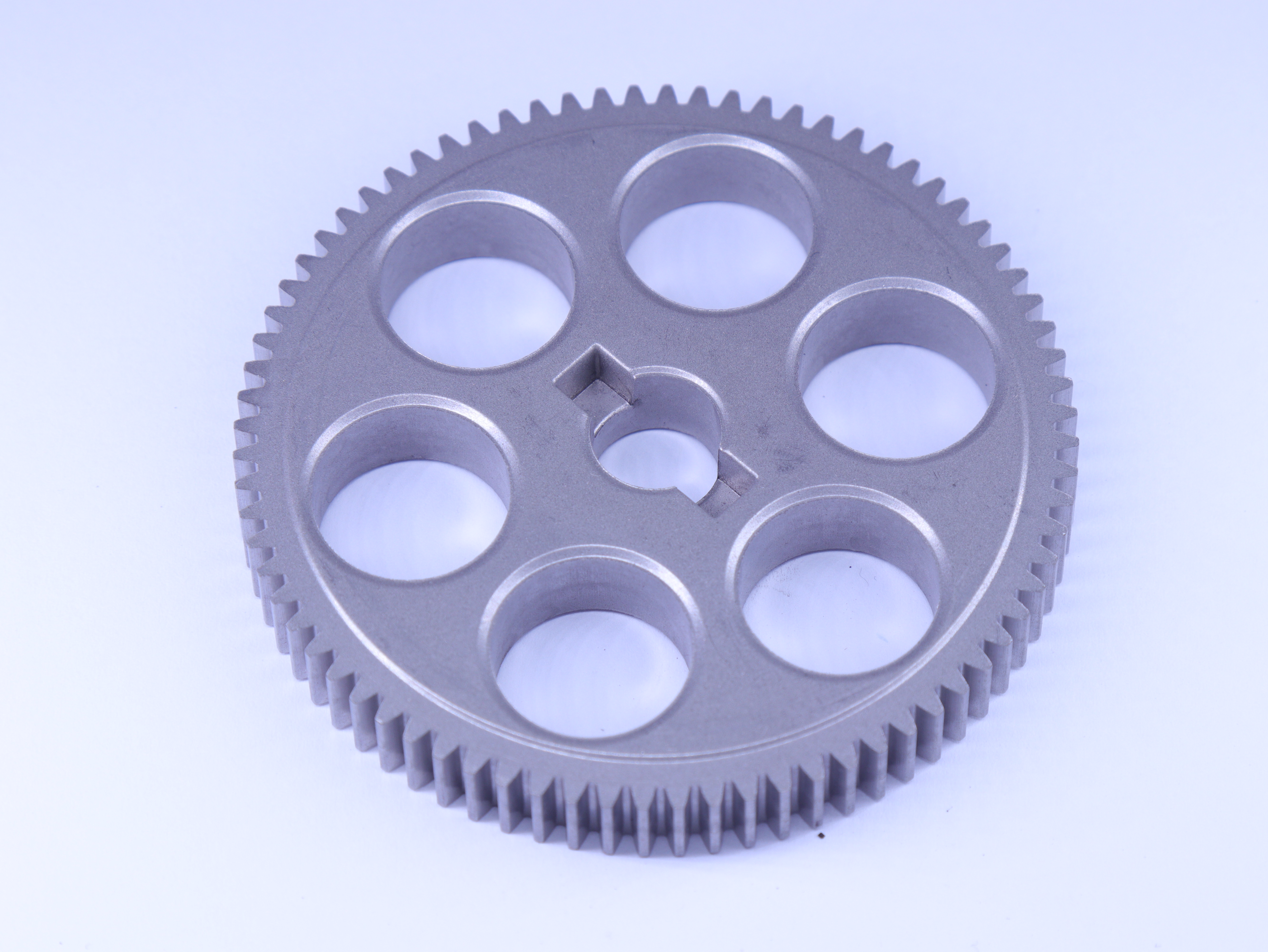
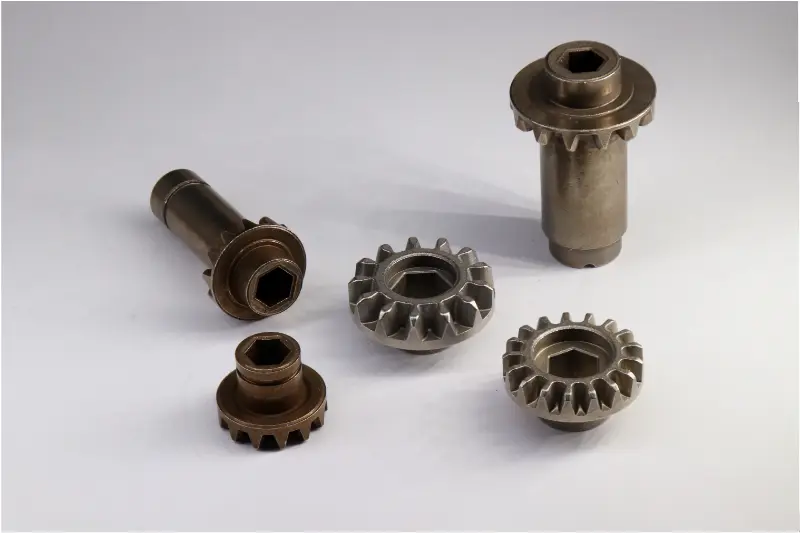
1. Small and medium‑sized transmission parts including gears, synchronous pulleys, oil‑impregnated bearings and cams — core advantageous products of professional China factory powder metallurgy lines;
2. Parts with high dimensional precision requirements that require a large amount of secondary machining after traditional casting, where powder metallurgy can effectively save post‑processing costs for manufacturers;
3. Products needing porous self‑lubricating structures with controllable porosity, which cannot be realized by traditional casting technology, forming the exclusive technical advantage of professional China suppliers;
4. Special composite materials such as iron‑copper‑graphite, which are difficult to mass‑produce via casting processes.
Keywords: Powder metallurgy, metal injection molding, powder metallurgy gears, China manufacturer, China factory, China supplier
Guangming Group is a professional China manufacturer, factory and supplier focusing on the R&D and manufacturing of metal forming technologies and wear‑resistant materials. We specialize in mass production of powder metallurgy products through metal compaction and metal injection molding processes.
Our company has a high‑quality professional talent team. The founding team comes from Guangdong Institute of Non‑Ferrous Metals (a former national ministerial‑level research institute), owning rich industry experience and strong independent R&D capabilities, which provides continuous innovative momentum for the development of our factory.
Up to now, we have obtained 5 invention patents and more than 30 utility model patents. We have passed IATF16949, ISO9001‑2015 Quality Management System, ISO14001 Environmental Management System and Intellectual Property Management System certifications, and obtained international trademark qualification. As an Innovative Enterprise of Guangdong Province, Guangzhou Sci‑Tech Little Giant Enterprise, council member unit of Guangdong Powder Metallurgy Industry Technology Innovation Alliance and initiator of Guangzhou Advanced Powder Metallurgy Cluster Promotion Center, we are a reliable high‑end China supplier and manufacturer for global customers.
We use cookies to offer you a better browsing experience, analyze site traffic and personalize content. By using this site, you agree to our use of cookies. Privacy Policy