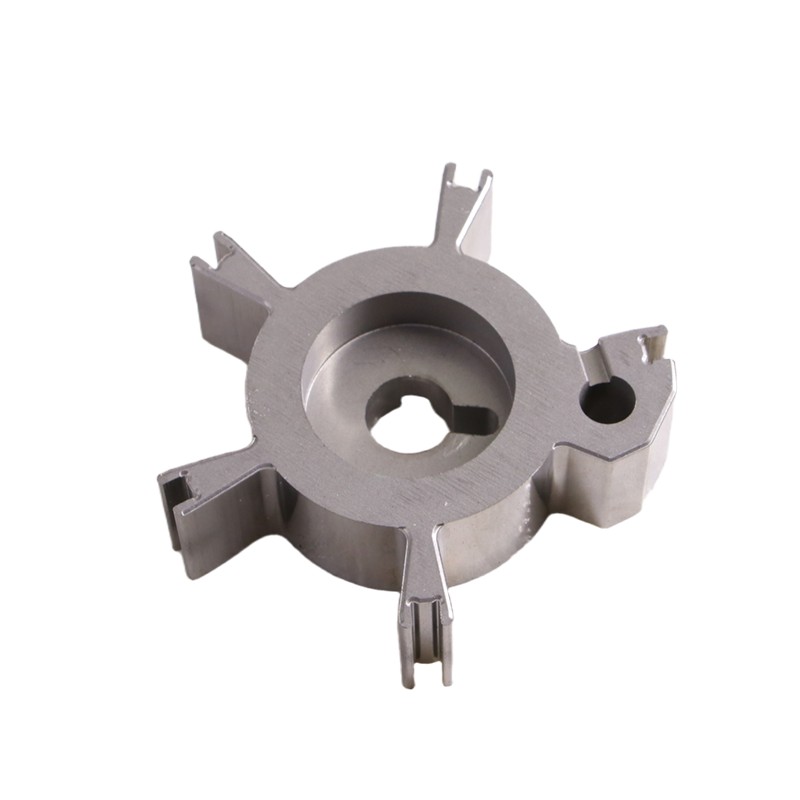
Full Material Introduction & Complete Manufacturing ProcessI. Two Mainstream Universal Materials for External Lock Cutting PlatesThe external lock cutting plate is fixed via outer latches matching the clamping slots of meat grinder heads, compatible with all household and commercial meat grinders. Two primary material categories dominate the market:
Common grades: 420 stainless steel, 304 stainless steel
(1) 420 Stainless Steel (Highest Sales Volume)
Advantages**: High hardness, sharp and wear-resistant, rust-proof, resistant to acid-base corrosion from meat juices. The cutting edge resists curling after long-term meat grinding. Smooth inner holes prevent meat adhesion and clogging.
Application Scenarios**: Breakfast shops, meat processing plants, and meat grinders with high-frequency long-term use.
(2) 304 Stainless Steel
Advantages**: Superior rust resistance, tolerant to brine and sauce corrosion. Slightly lower hardness than 420 stainless steel. Widely used for baby food and sausage processing.
Disadvantage**: Pure 304 steel lacks sufficient cutting hardness for cutting plates. Most manufacturers adopt composite structures: 304 steel base plate with a 420 stainless steel working surface for cutting.
2. Powder Metallurgy Iron Cutting Plate (Low-Cost Household Models)
Material: Iron-based powder metallurgy (formed by compacting iron powder with basic anti-rust surface treatment)
Merits: Ultra-low production cost, affordable price, adequate for short-term household use.
Drawbacks:
1. Low hardness; edges quickly wear and dull when grinding meat with tendons or crushed small bones.
2. Poor rust resistance; prone to rust if not fully dried after washing.
Supplementary Note: Inferior Galvanized Cast Iron (Not Recommended)
An outdated low-cost accessory. Made of cast iron casting with galvanized coating. The coating peels off easily, leading to heavy metal precipitation. It fails food contact safety standards and has been phased out by formal manufacturers.II. Complete Manufacturing Processes for the Two Material TypesProcess 1: Precision Stamping & Heat Treatment for Stainless Steel External Lock Cutting Plates
1. Blanking Stamping: Stainless steel sheets are stamped via molds to form the complete disc body, outer locking latches, and central drive shaft hole in one operation.
3. Deburring & Polishing: Vibratory grinding and polishing remove burrs from cutting edges, latches and hole edges to prevent meat adhesion and scratch hazards.
4. Quenching Heat Treatment (Core Process): 420 stainless steel undergoes high-temperature quenching followed by low-temperature tempering to boost surface hardness and cutting wear resistance. Stainless steel cutting plates without quenching dull rapidly.
5. Food-Grade Passivation Treatment: Surface passivation enhances rust resistance with zero chemical residues, complying with food contact safety standards.
6. Quality Inspection & Sorting: Dimensional testing of outer diameter, latch size, hole diameter and flatness; defective parts with deformation or dimensional deviations are screened out.
Process 2: Integral Compression Molding for Powder Metallurgy External Lock Cutting Plates
1. Powder Mixing: Iron powder, graphite and lubricants are fully blended.
2. High-Pressure Compaction: A single mold press forms the complete cutting plate integrally, including the disc body, outer locking latches, meat outlet holes and central shaft hole.
3. High-Temperature Sintering: High-temperature sintering fuses powder particles to form solid iron blanks.
4. Basic Anti-Rust Treatment: Simple oil dipping or paint coating for rust prevention, without passivation procedures.
5. Light Deburring: Minor surface burr grinding; full polishing is simplified or omitted entirely.
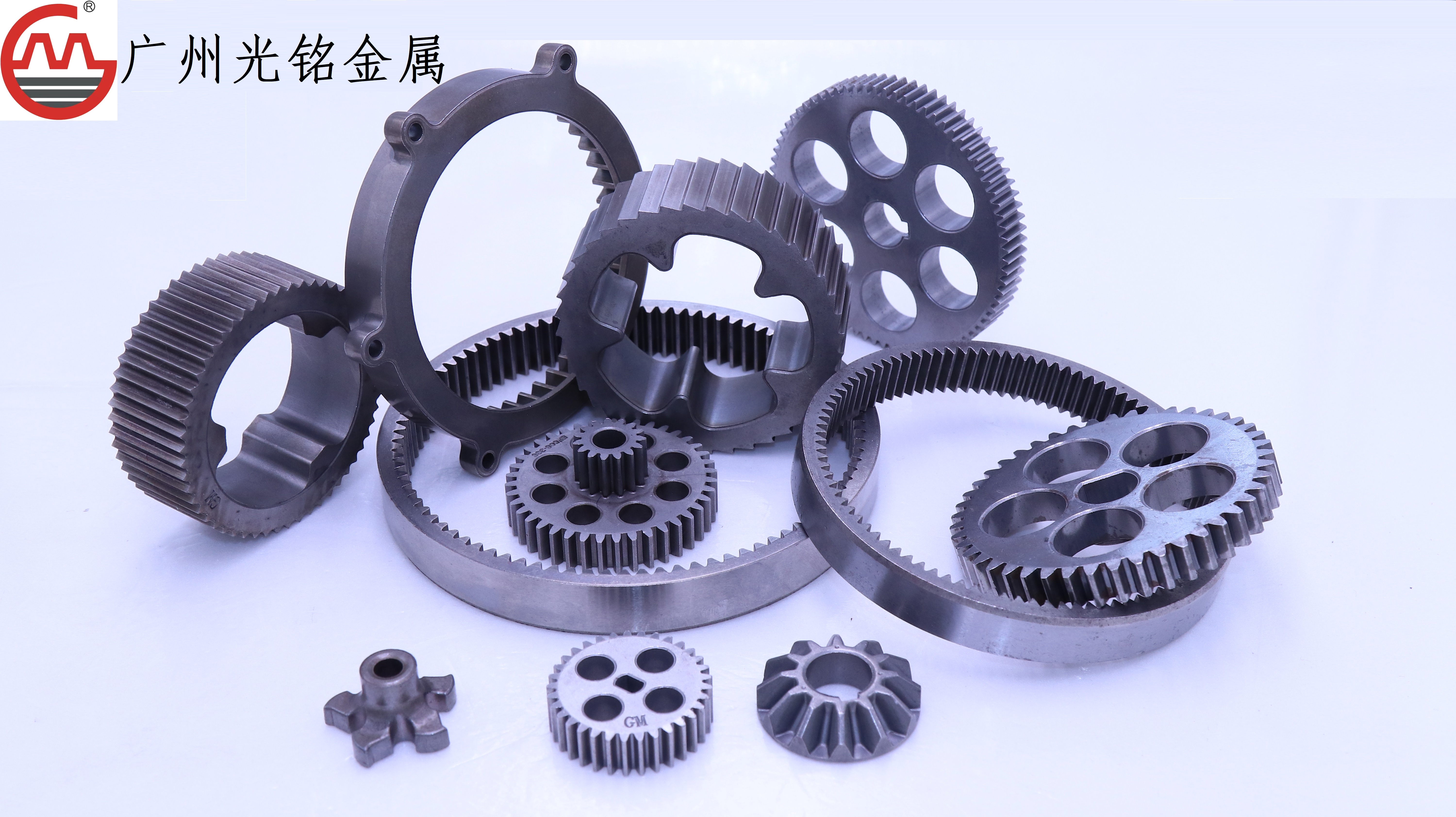
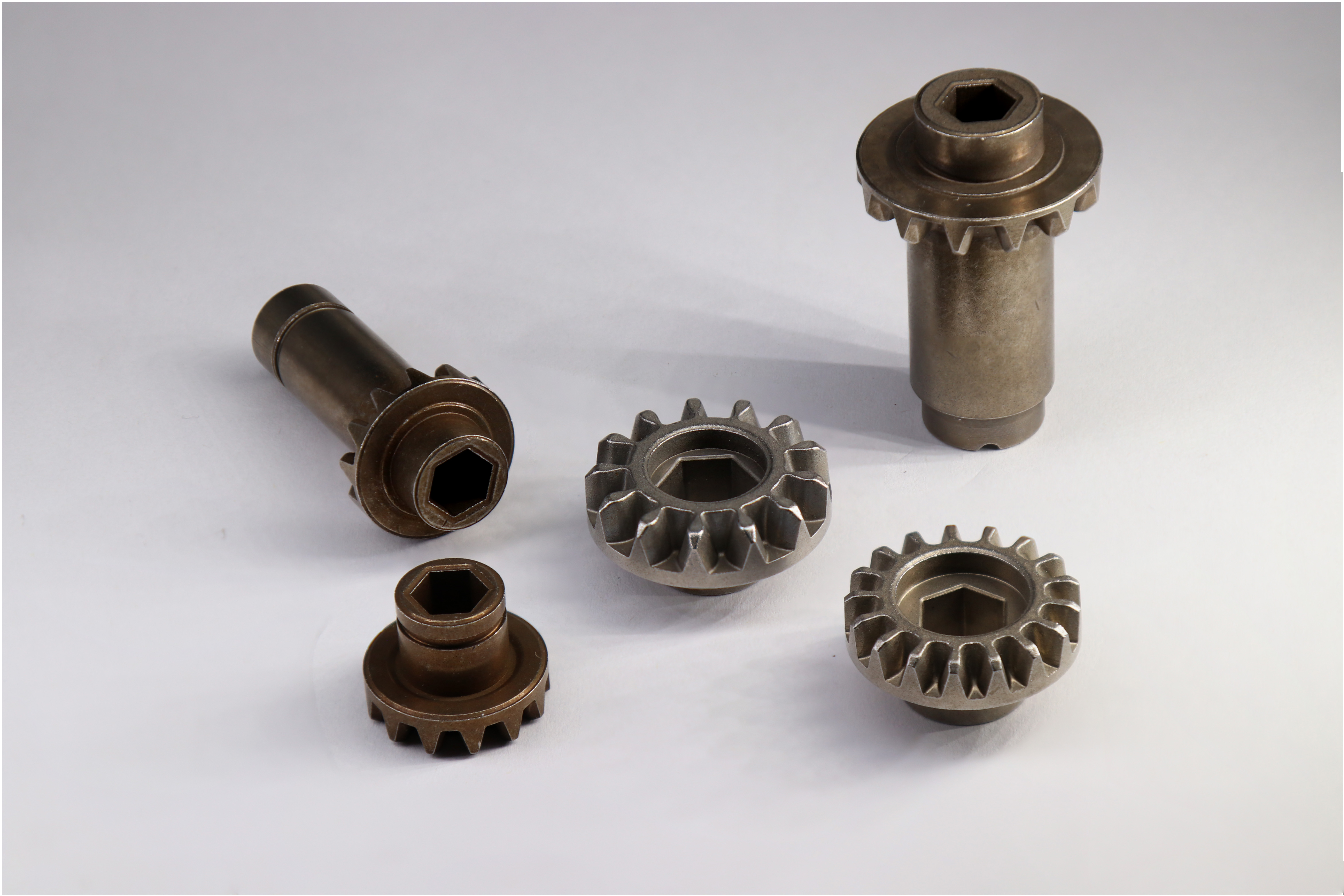
Powder Metallurgy, Metal Injection Molding, Powder Metallurgy Gears
Guangming Group
Guangming Group specializes in the R&D and manufacturing of metal forming technologies and wear-resistant materials. Our core products cover powder metallurgy parts fabricated via metal compression molding and metal injection molding.
The company boasts a high-caliber talent team. Our founding team originates from a ministerial-level research institute — Guangdong Institute of Non-Ferrous Metals. With profound industry experience and robust R&D capabilities, we sustain continuous technological innovation for the enterprise.
The company holds 5 invention patents and over 30 utility model patents. We have obtained multiple system certifications: IATF16949 Automotive Quality Management System, ISO9001-2015 Quality Management System, ISO14001 Environmental Management System and Intellectual Property Management System, alongside international trademark certification.
We are recognized as an Innovative Enterprise of Guangdong Province, a Science & Technology Little Giant Enterprise of Guangzhou, a council member unit of Guangdong Powder Metallurgy Industry Technology Innovation Alliance, and an initiator of Guangzhou Advanced Powder Metallurgy Cluster Promotion Center.
We use cookies to offer you a better browsing experience, analyze site traffic and personalize content. By using this site, you agree to our use of cookies. Privacy Policy