English Translation (B2B Industrial Version, for website / catalog / overseas video script)
Core Reasons Why Powder Metallurgy Is the Optimal Process for Meat Grinder External Locking Cutter Discs
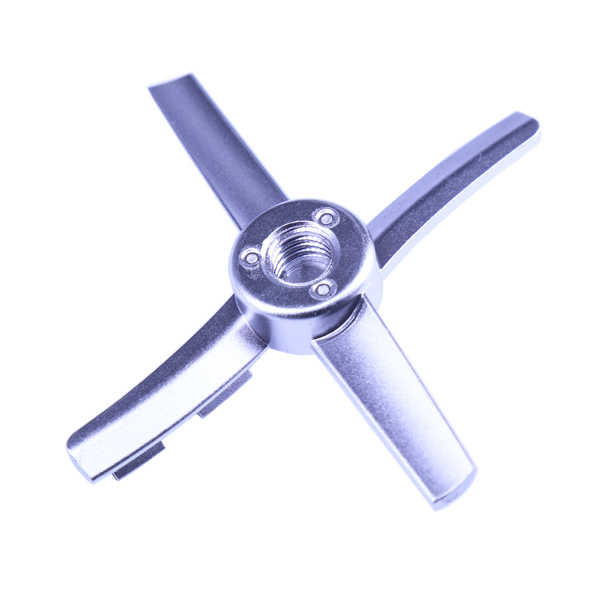
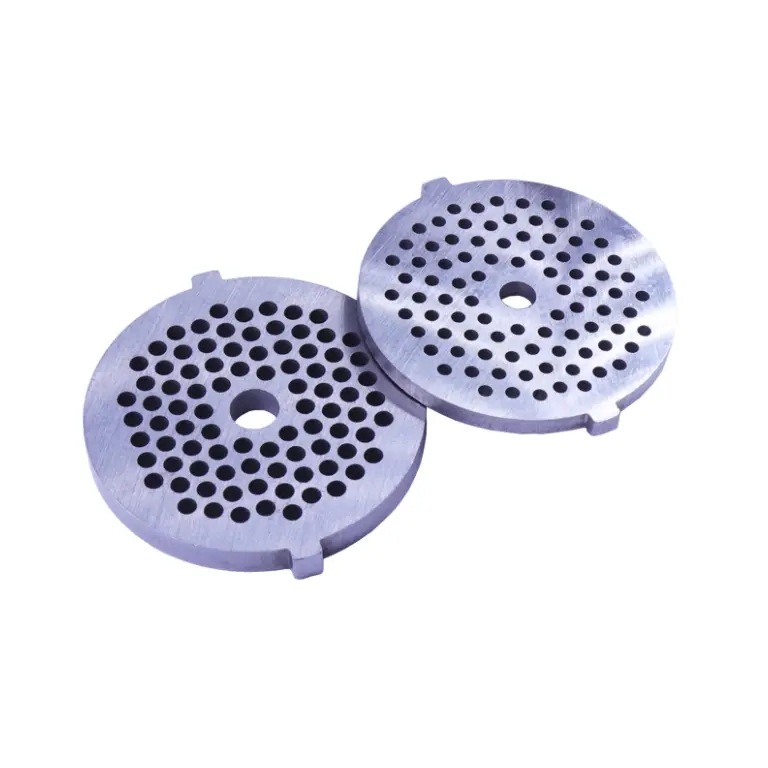
The core requirements for external locking cutter discs (meat outlet plates): uniform hole positions, flat end faces, wear resistance, deformation resistance, food safety, and low cost for mass production. Near-net-shape powder metallurgy (PM) perfectly meets these requirements and has prominent advantages over stamping, CNC machining and die casting.
1. Integrated structural forming: one-step forming of external lock positioning and multiple holes
The technical challenges of external locking cutter discs include outer ring snap positioning, numerous regular meat outlet holes, and end face parallelism.
Powder metallurgy: The profile, external lock grooves and all meat outlet holes are pressed in one go by the mold. Only sintering plus minor sizing is required, with no secondary drilling or grooving.
Stamping: It is difficult to manufacture thick cutter discs via thin-sheet stamping. Multi-hole stamping tends to cause hole position deviation and burrs at hole edges. Bent external locks suffer springback deformation, leading to unstable assembly clearances.
CNC machining: Drilling numerous holes on a solid steel plate incurs extremely high processing costs and massive material waste.
Die casting: Stainless steel die casting is difficult to implement and produces many pores. Cast parts have insufficient wear resistance and are prone to rust, making them unsuitable for food contact.
The dimensional accuracy of the external lock structure directly controls the clearance between the cutter disc and cross rotating blade. Unstable clearance will increase mincing resistance, cause heat buildup and blade breakage. Powder metallurgy delivers far better dimensional consistency in mass production than alternative processes.
2. Customizable material properties combining wear resistance, toughness and food-grade rust protection
420 stainless steel powder metallurgy parts are commonly used, manufactured by vacuum sintering with uniform microstructure and no casting segregation.
Hardness can be stably maintained at HRC46~55, complying with national standards for cutter disc hardness. Excellent wear resistance prevents hole wall enlargement from abrasion by meat tendons and extends service life.
Controllable porosity: After densification, passivation and polishing can be performed to meet food contact requirements and pass salt spray corrosion tests. Controlled micropores also provide partial vibration and noise reduction.
Compared with stamped steel sheets: Stamped sheets tend to deform during quenching, and thin sheets cannot achieve high hardness. CNC-machined 420 steel easily deforms after quenching with low yield rate.
3. Cost advantage in mass production with ultra-high material utilization
Powder metallurgy achieves material utilization above 95% with nearly no scrap. CNC drilling generates large volumes of metal chips and high raw material costs.
Mold forming, automated compaction and sintering with multi-cavity molds deliver remarkable unit cost advantages for mass production up to millions of pieces.
Limitation: High mold opening cost, which is uneconomical for small batches. Meat grinder cutter discs are standard consumer appliance components naturally suited for large-volume manufacturing.
4. Excellent batch stability and consistent assembly performance
External locking cutter discs are interchangeable parts. Dimensional variation directly affects the overall performance of meat grinders.
Powder metallurgy: Mold shaping, constant-temperature sintering and sizing ensure high consistency of part thickness, external lock seats, hole diameter and flatness across batches, supporting stable after-sales assembly and interchangeability.
Stamping: Sheet springback and mold wear lead to large batch tolerance fluctuation. Investment casting is prone to shrinkage cavities and dimensional drift.
5. Suitable for hygienic surface treatment
Vacuum-sintered stainless steel parts contain few internal impurities. After polishing and passivation, they are burr-free and free of sharp edges, less likely to trap meat residues and compliant with food contact standards. Unlike die castings, they avoid contamination trapped in pores and substance leaching risks.
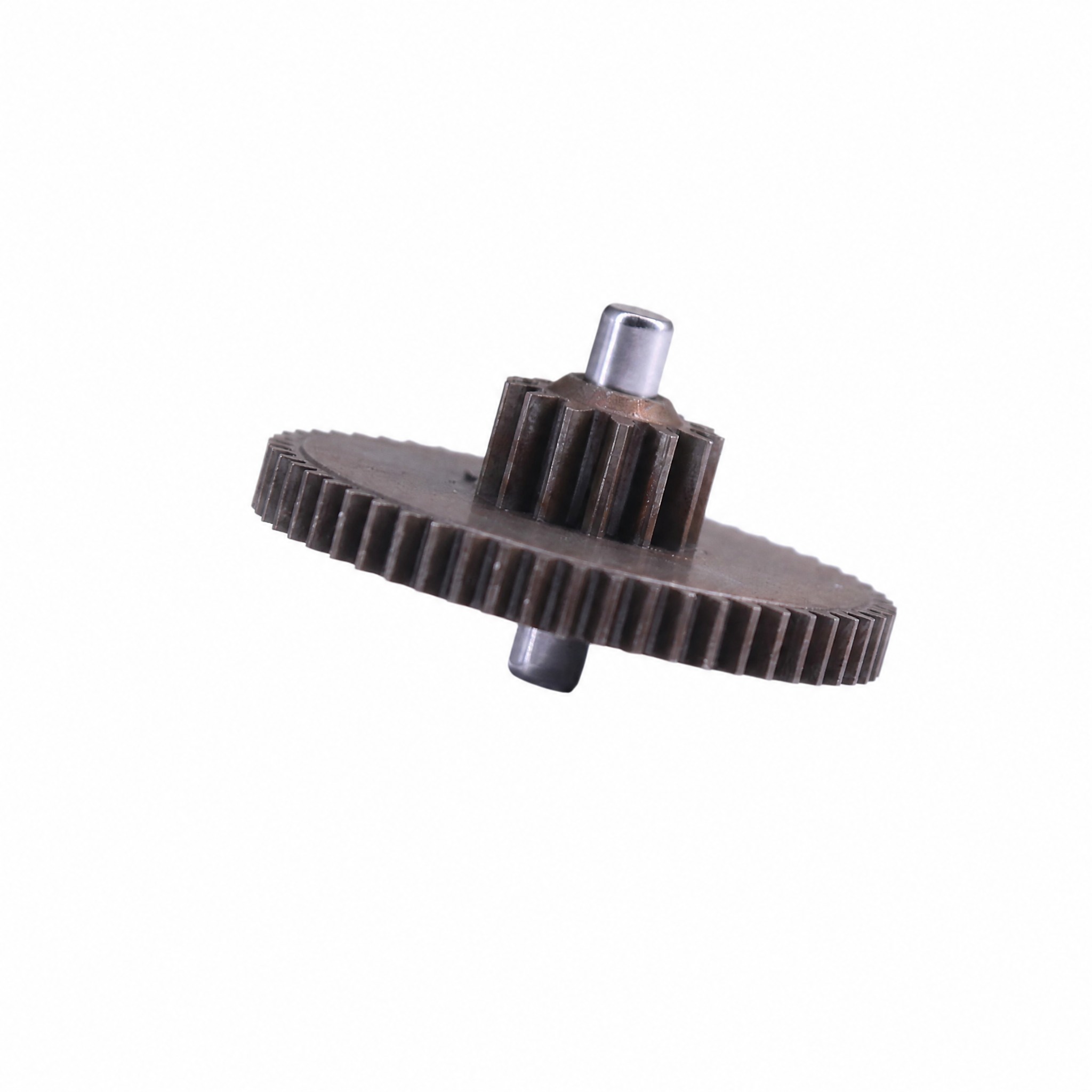
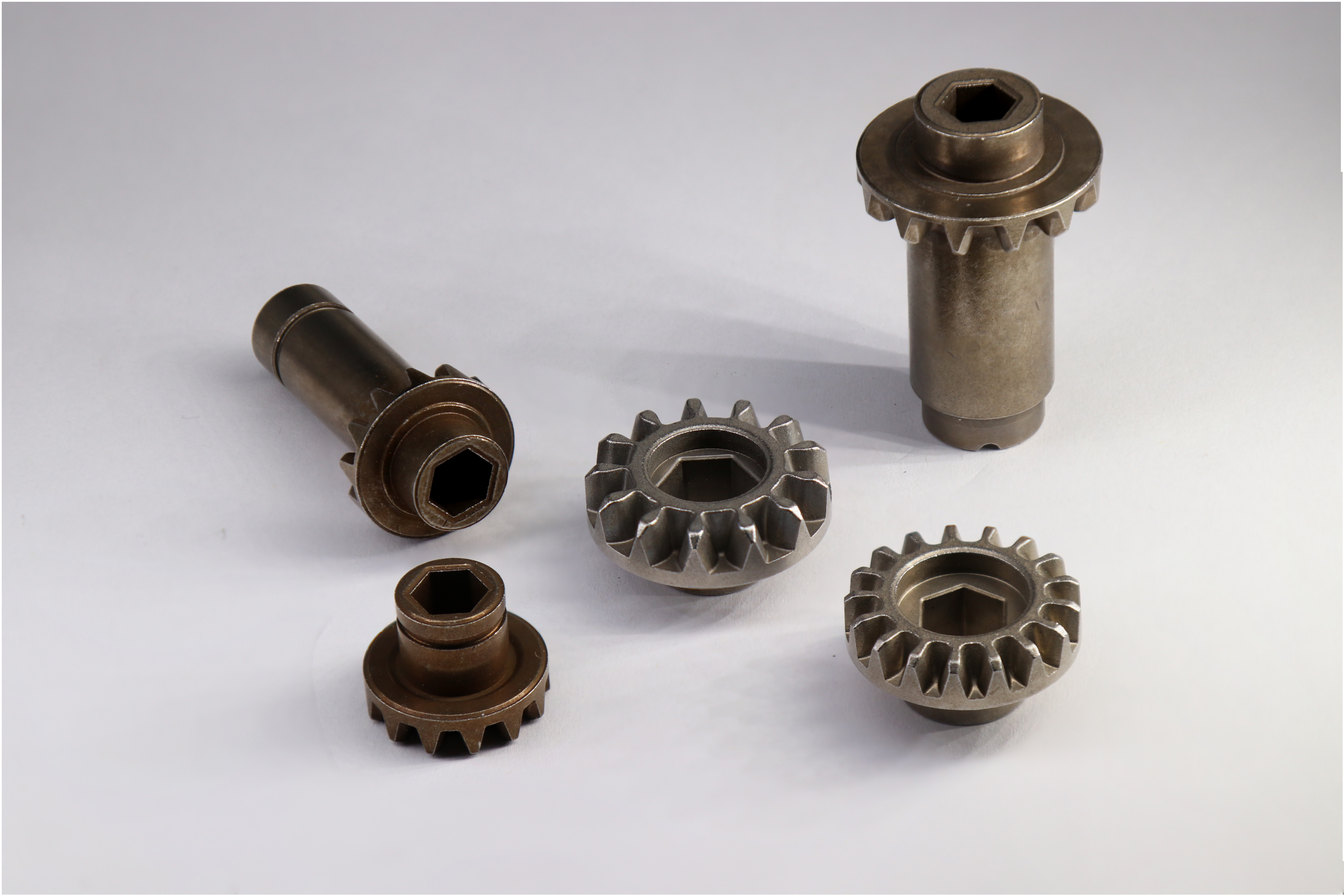
Powder Metallurgy, Metal Injection Molding (MIM), Powder Metallurgy Gears
Guangming Group specializes in R&D and manufacturing of metal forming technologies and wear-resistant materials. Our main products include powder metallurgy components via powder compaction and metal injection molding.
The company is staffed by a high-caliber talent team. Our founding team comes from Guangdong Institute of Non-Ferrous Metals, a research institute directly under a former national ministry, boasting rich industry experience and strong R&D capabilities to sustain continuous innovation.
We have obtained 5 invention patents and more than 30 utility model patents. Our certifications include IATF16949 Quality Management System, ISO9001-2015 Quality Management System, ISO14001 Environmental Management System and Intellectual Property Management System, together with international trademark registration.
We are an Innovative Enterprise of Guangdong Province, a Guangzhou Science & Technology Little Giant Enterprise, director unit of Guangdong Powder Metallurgy Industry Technology Innovation Alliance, and initiator of Guangzhou Advanced Powder Metallurgy Cluster Promotion Center.
We use cookies to offer you a better browsing experience, analyze site traffic and personalize content. By using this site, you agree to our use of cookies. Privacy Policy