In short: Breaking the boundaries of size and material, digital and intelligent process, green short-cycle manufacturing, cross-process integration, and application expansion from 3C products to medical devices, humanoid robots, new energy vehicles and high-end aerospace components.
I. Upgrade of Material Systems (Core Breakthrough)
1. Popularization of domestic high-performance alloys
Titanium alloy MIM (e.g. TC4): Reduced oxygen content and improved fatigue performance. Applied to foldable hinge components, medical implants and robot joints, which is one of the biggest highlights in the future.
Industrialization of nickel-based superalloys, Kovar alloys, soft magnetic alloys, magnesium alloys (biodegradable medical implants) and tungsten heavy alloys, expanding markets in aerospace, semiconductors and medical sectors.
2. New feedstock and binder systems
Feedstock with high powder loading: Reduces sintering shrinkage and distortion, and improves dimensional stability.
Environment-friendly binders (water-based, low carbon residue systems) replace traditional paraffin-based binders to cut degreasing exhaust emissions and ease environmental compliance pressure.
3. Composite MIM
Metal matrix particle-reinforced composites and co-sintering of dissimilar metals. A single component can achieve multiple functions including wear resistance, thermal conductivity and magnetic permeability, reducing assembly and welding of multiple parts.
II. Process Technology Iteration to Break Original Limitations
1. Dual expansion of micro MIM and large-size MIM
Micro MIM: Ultra-fine micron-scale parts for micro sensors and minimally invasive medical instruments.
Large-size MIM: Breaks the traditional weight limit of 250g, solves cracking during degreasing and sintering distortion of thick-wall parts, and broadens the scope of applicable components.
2. New sintering and degreasing processes
Microwave sintering and continuous degreasing & sintering production lines greatly shorten production cycles and cut energy consumption. Combined with HIP (Hot Isostatic Pressing), internal pores are further eliminated and fatigue strength is boosted to reach properties comparable to forgings, meeting stringent aerospace and medical standards.
3. Hybrid process integration (MIM + 3D Printing / MIM + CNC)
3D printing for rapid fabrication of MIM molds, shortening prototype development cycles and solving the pain point of high cost for small-batch MIM orders. It is also feasible to print green parts followed by degreasing and sintering to form a hybrid manufacturing route.
MIM forms the main complex structure while CNC only machines local ultra-high-precision features. This MIM+CNC combined process balances cost, complexity and precision.
III. Full-process Digitalization & Intelligent Manufacturing
1. Pre-applied CAE simulation: Simulation of feedstock flow, degreasing, sintering shrinkage and deformation to predict warpage, porosity and filling defects in advance, reducing mold trial times and R&D lead time.
2. Closed-loop control with AI and machine vision: AI optimizes feedstock formula, injection parameters and sintering curves. On-line visual inspection detects defects in green parts, brown parts and finished products for early anomaly warning, shifting from experience-based production to data-driven manufacturing and improving yield rate.
3. Automated production lines: Integrated lines for automatic compounding, injection molding, degreasing, sintering and post-treatment lower labor cost and deliver better batch consistency.
IV. Green & Low-cost Manufacturing
Low-emission binders and continuous low-energy-consumption sintering furnaces reduce VOC emissions to meet environmental regulations.
100% recycling and reuse of powder and green part scrap further cuts raw material costs.
Domestic equipment and spherical powder replace imported alternatives, greatly lowering the overall threshold of MIM and reducing costs for small and medium batch orders.
V. Expansion of Downstream Application Scenarios (Market Direction)
Traditional MIM is highly dependent on consumer electronics. Future growth tracks:
1. New energy vehicles: Micro valves, motor structural parts, locking mechanisms, precision connectors for battery modules.
4. Aerospace & semiconductors: Small superalloy components, packaging parts, thermal conduction and shielding components.
VI. Continuous Resolution of Industry Pain Points
1. Mitigate deformation caused by uneven sintering shrinkage to further improve dimensional stability.
2. Raise yield rate of thick-wall and heavy-weight parts.
3. Reduce mold cost and improve the economy of small-batch orders, so MIM is no longer only viable for mass orders of tens of thousands of pieces.
4. Complete fatigue and reliability databases for MIM components to satisfy high-reliability certification requirements in aerospace and medical industries.
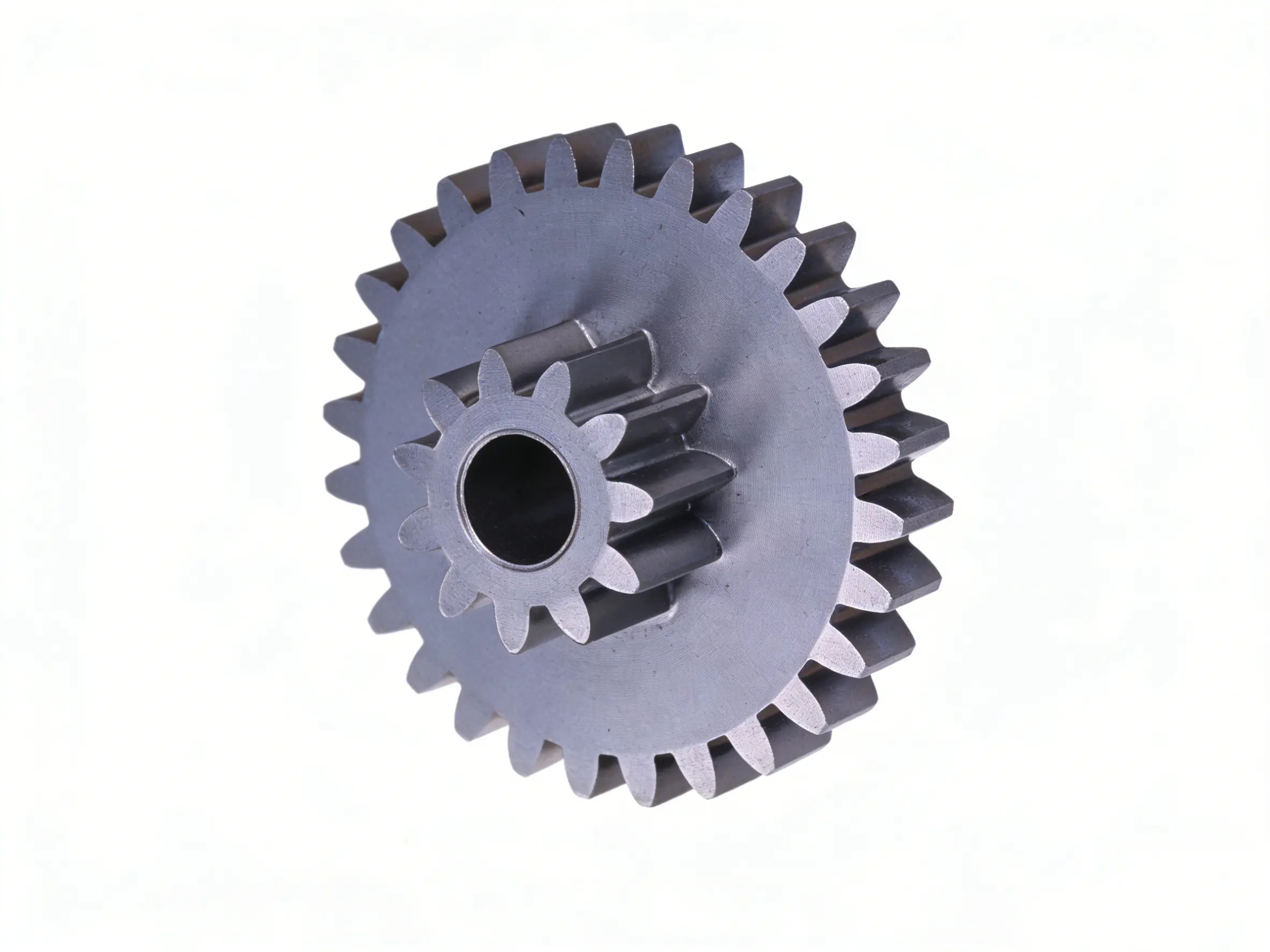
Keywords: Powder Metallurgy, Metal Injection Molding, Powder Metallurgy Gears
Guangming Group
Guangming Group specializes in the R&D and manufacturing of metal forming technology and wear-resistant materials. Its main products include powder metallurgy components made by metal compaction molding and injection molding.
The company has a high-caliber talent team. The founding team comes from Guangdong Institute of Non-Ferrous Metals, a national ministerial-level research institute, boasting rich industry experience and strong R&D capabilities to provide continuous innovation momentum for corporate development.
The group has obtained 5 invention patents and over 30 utility model patents. It has passed IATF16949, ISO9001:2015, ISO14001 and Intellectual Property Management System certifications, and owns international trademark registrations. It is an Innovative Enterprise of Guangdong Province, a Little Giant Science and Technology Enterprise of Guangzhou, a director unit of Guangdong Powder Metallurgy Industry Technology Innovation Alliance and the initiator of Guangzhou Advanced Powder Metallurgy Cluster Promotion Center.
We use cookies to offer you a better browsing experience, analyze site traffic and personalize content. By using this site, you agree to our use of cookies. Privacy Policy