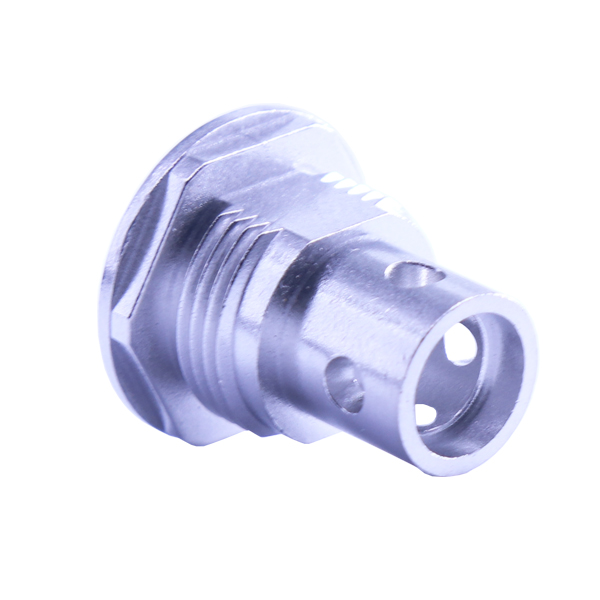
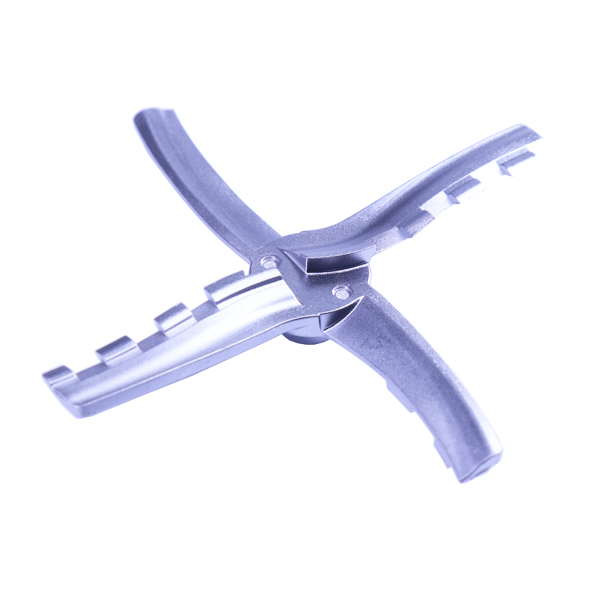
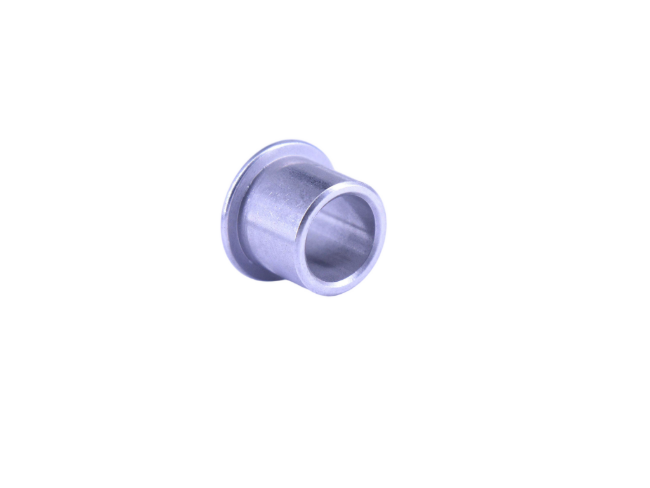
Powder metallurgy gears adopt the near-net-shape process. After sintering, parts are basically close to finished dimensions with little or no subsequent machining. Its advantages focus on five dimensions: cost, forming capability, lubrication, batch consistency and material design.
1、Extremely high material utilization with remarkable cost advantages in mass production
Conventionally machined gears are milled and hobbed from solid bars or forgings, generating a large amount of metal chips. Their material utilization normally ranges from 50% to 70%.
For powder metallurgy: metal powder is directly pressed into gear blanks, achieving material utilization ≥95% with almost no scrap.
Value: Raw material savings bring obvious cost reduction in mass production. The more complex the part and the smaller the tooth profile, the stronger its price advantage over machined gears. Mass production cost is generally 20%~40% lower than that of machined gears.
Limitation: Hard alloy molds are required. The mold cost is high when allocated to small-batch or sample orders, so it is not suitable for single-piece or low-volume production.
2、 One-piece forming of complex composite structures to reduce assembly procedures
The pressing process can form spur gears, internal gears, stepped gears and composite gears with flanges, bosses or locating holes in a single stroke, integrating multiple features into one component.
Traditional process: Multiple parts are fabricated separately and then riveted, press-fitted or welded. Each additional assembly step introduces accumulated tolerances and raises labor cost and defect rate.
Powder metallurgy: Composite structures are formed in one step, cutting part quantity, eliminating assembly operations and lowering assembly errors.
Typical case: Integrated planetary carrier and internal gear for power tools, stepped double gears.
Restriction: The helix angle of helical gears cannot be too large. It is not suitable for large-helix-angle gears, herringbone gears or gears with extra-large outer diameter.
3、Porous structure enabling oil impregnation for self-lubrication (unique advantage)
Sintered powder metallurgy parts contain interconnected pores with controllable porosity (generally 10%~20%). Vacuum oil impregnation can be applied to store lubricant inside micropores.
When the gear heats up during operation, oil expands and seeps onto the tooth surface to form a lubricating oil film. When it cools down after shutdown, oil is drawn back into pores.
It fits closed gearboxes, intermittent operating conditions where oil refilling is difficult (window motor, seat motor, small reducers). It reduces reliance on external oil supply systems, cuts lubrication maintenance and achieves quieter operation.
Note: Although oil-impregnated self-lubrication is a strength, pores reduce matrix strength. It is not recommended for continuous heavy-load impact conditions. Steam treatment or densification can be adopted to reduce porosity at the cost of partial oil storage capacity for higher strength.
4、Excellent dimensional consistency in batches, high stability and compatibility with automated assembly
Powder metallurgy relies on precision mold pressing. For gears produced by the same mold, the dispersion of tooth profile, tooth thickness, bore and outer diameter is minimal.
Machining: Every gear needs hobbing or milling. Dimensional fluctuation between individual parts is greater due to machine tools, tool wear and fixtures.
Powder metallurgy batch parts maintain stable tolerances with gear accuracy up to Grade 7~9. It is highly suitable for automated assembly lines and reduces final assembly defect rates.
Once the mold is finalized, product quality fluctuation during continuous mass production is small, quality control is simple, ideal for million-piece bulk orders.
5、Flexible material formulation with customizable density and mechanical properties
Material performance can be freely adjusted by modifying powder composition, compaction pressure and sintering process:
1. Fe-C (Iron-carbon): Basic grade, cost-effective for light-load and low-speed applications.
2. Fe-Cu (Iron-copper): Improved strength and wear resistance, widely used for oil pump gears.
3. Fe-Ni-Mo iron-based alloy steel: Available for subsequent quenching, hardness HRC35~50, enhanced contact fatigue strength for medium-load working conditions.
4. Copper-based powder metallurgy: Low friction, noise reduction and corrosion resistance for miniature instrument gears.
5. Stainless steel powder: Rust-proof for humid environments.
Compaction density is also adjustable: low density prioritizes self-lubrication; high density improves tensile and bending strength while retaining wear resistance.
Compared with forged steel: Forged steel has fixed material properties and performance improvement mainly depends on heat treatment. Powder metallurgy allows custom material formulation starting from metal powder.
6、Controllable surface properties, multiple post-treatment options for diverse working conditions
Sintered blanks can select post-treatments as required to expand application scenarios:
Sizing: Mold calibration to further tighten gear tolerances.
Steam oxidation (steam treatment): Forms dense oxide layer on surface to improve surface hardness, sealing performance and rust resistance; pores are sealed and oil impregnation is no longer available.
Resin impregnation: Seals pores and enhances air tightness.
7、Lightweight advantage
With identical outline dimensions, powder metallurgy gears have lower density than forged steel (6.2~7.2 g/cm³ vs. 7.85 g/cm³ for forged steel). They feature lighter weight, lower moment of inertia and smaller starting load for motors, suitable for small motors with frequent high-speed start-stop cycles.
Powder Metallurgy | Metal Injection Molding | Powder Metallurgy Gears
Guangming Group specializes in R&D and manufacturing of metal forming technology and wear-resistant materials. Our main products include powder metallurgy parts via metal compaction and injection molding.
The company has a high-caliber talent team. Its founding team comes from Guangzhou Research Institute of Non-ferrous Metals, a national ministerial research institute, boasting rich industry experience and R&D capabilities to deliver continuous innovation.
Guangming Group has obtained 5 invention patents and over 30 utility model patents. It is certified with IATF16949, ISO9001-2015, ISO14001 and intellectual property management system, plus international trademark registration. We are an innovative enterprise in Guangdong Province, a Guangzhou Science & Technology Little Giant Enterprise, director unit of Guangdong Powder Metallurgy Industry Technology Innovation Alliance and initiator of Guangzhou Advanced Powder Metallurgy Cluster Promotion Center.
We use cookies to offer you a better browsing experience, analyze site traffic and personalize content. By using this site, you agree to our use of cookies. Privacy Policy