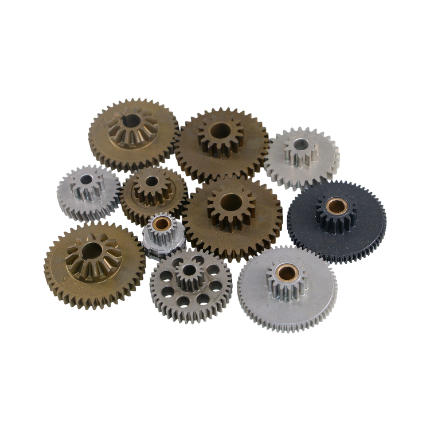
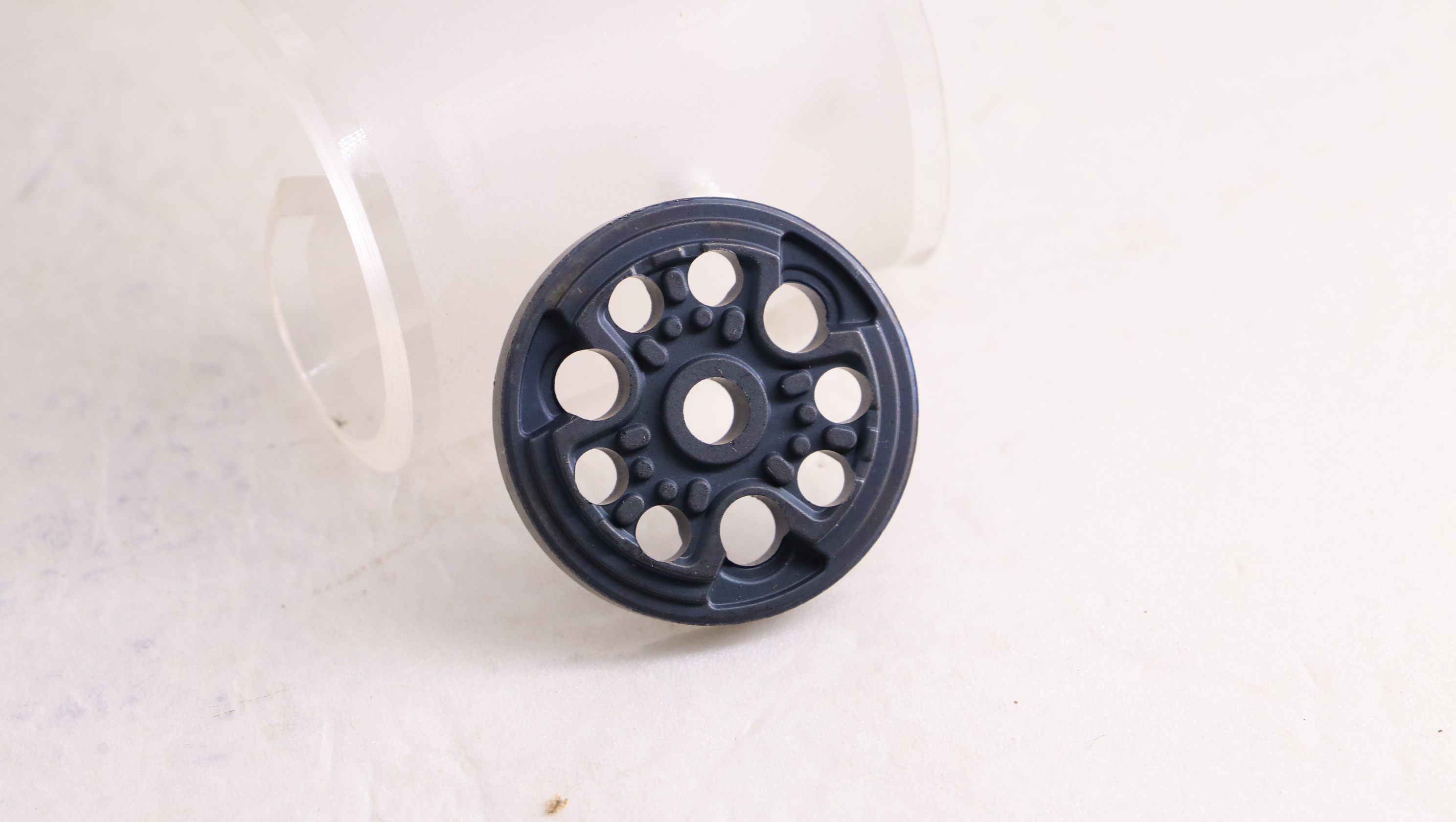
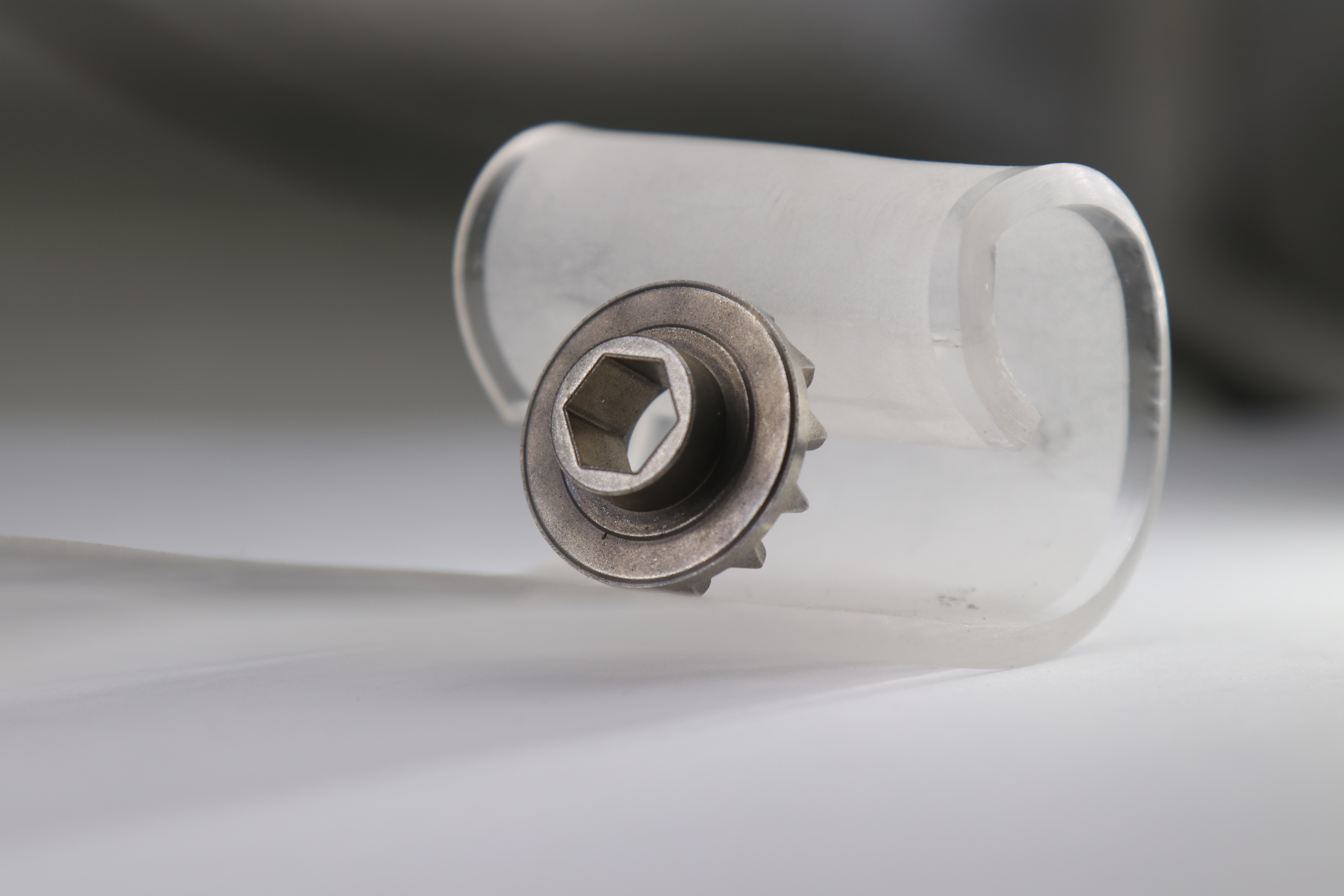
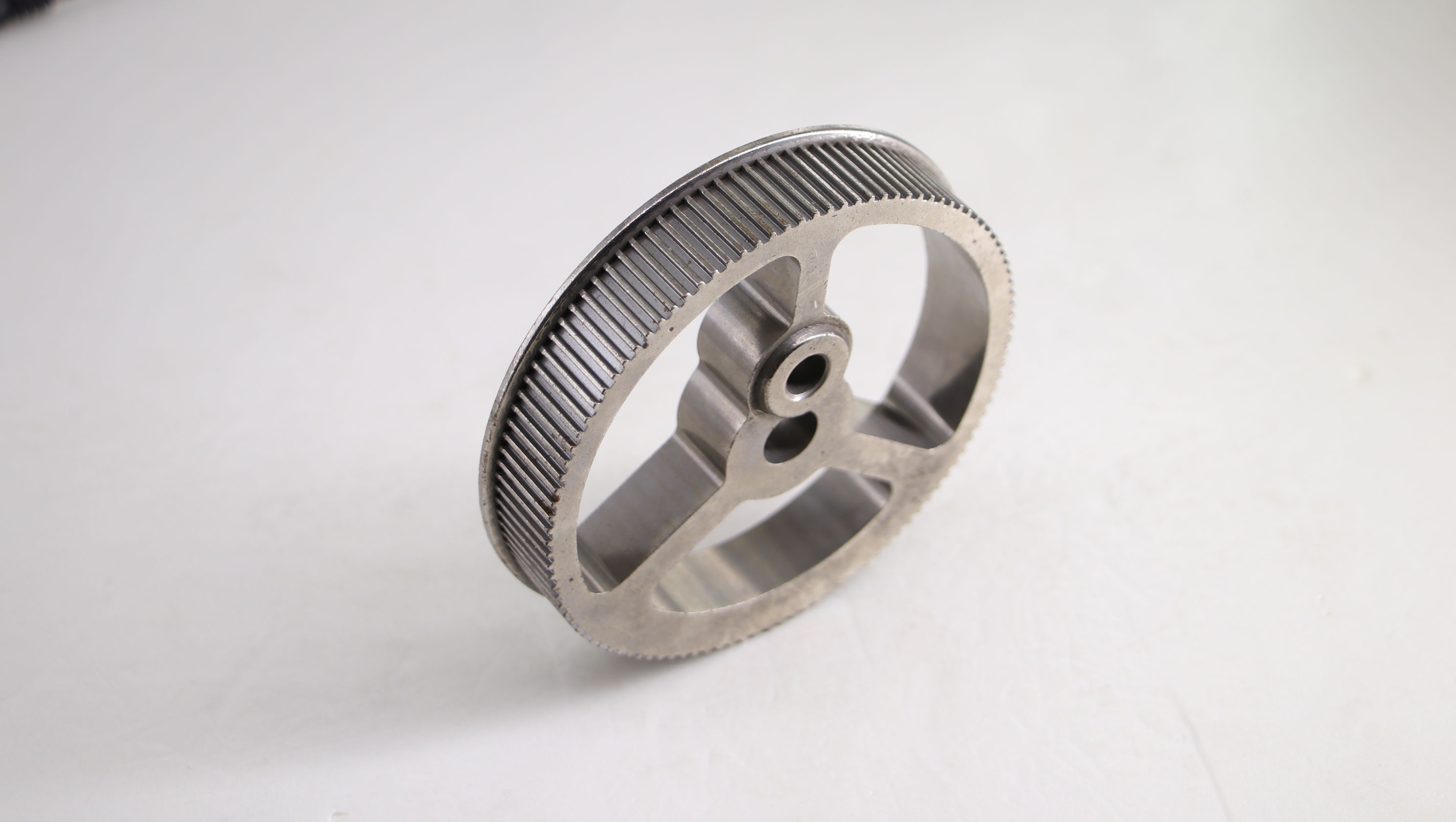
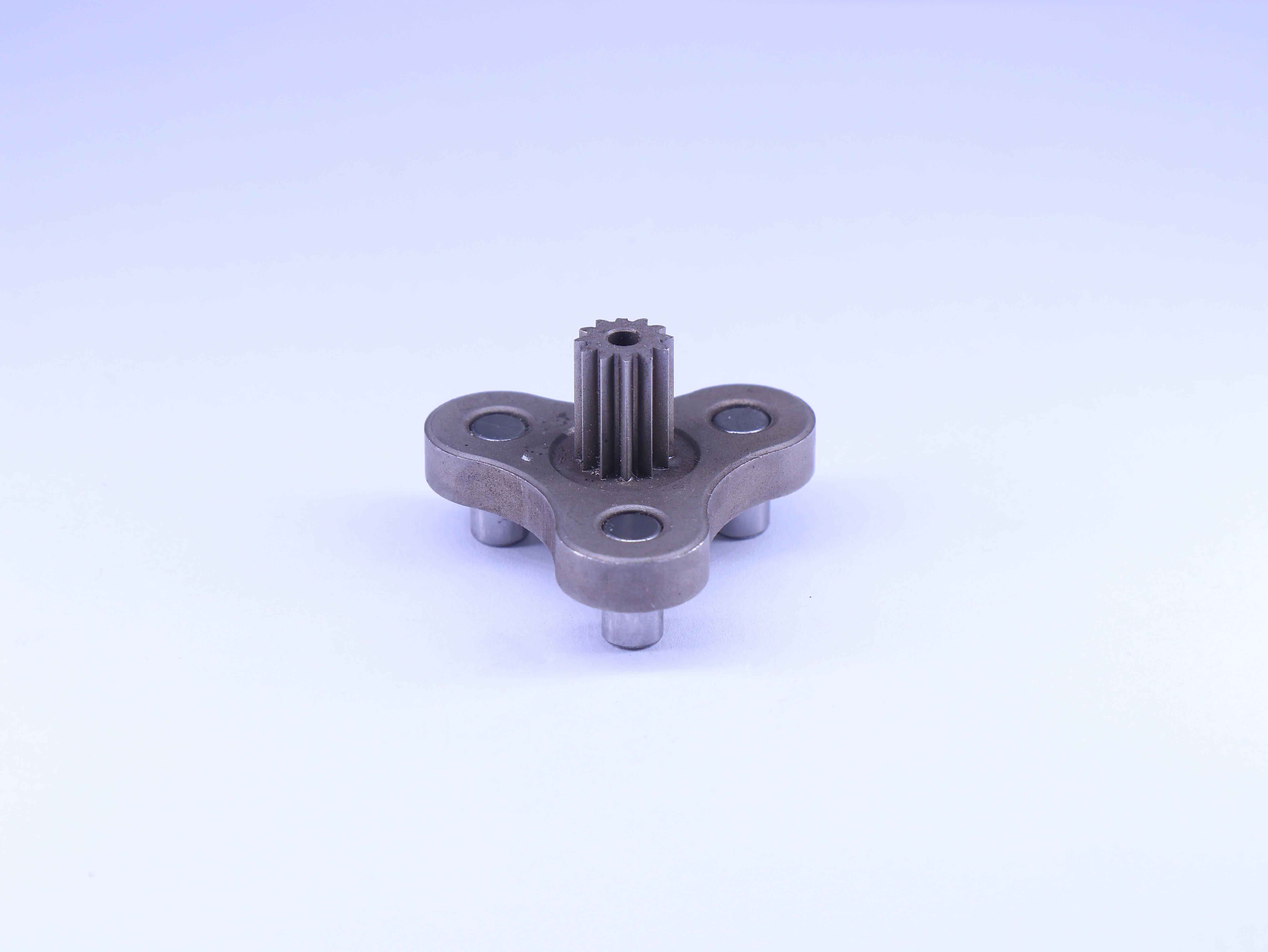
Powder Metallurgy Gears: Engineering Solutions to Improve Hardness and Wear Resistance
Core principle: First increase density and reduce harmful pores (foundation), then enhance matrix/tooth surface hardness (performance improvement), and finally adopt surface strengthening and lubrication protection (reinforcement). If only heat treatment is used to raise hardness, tooth surface spalling will easily occur with insufficient density, and the improvement in wear resistance will be limited.
I. Compaction and Sintering: Reduce pores from the substrate to build a solid wearresistant foundation
1. Improve sintered density
Warm compaction process: Achieves 0.15~0.3 g/cm³ higher density than roomtemperature compaction, with fine and uniform pores, eliminating large and connected pores; avoids pore accumulation on tooth surfaces and tooth roots.
Repressing + resintering: Secondary compaction and sizing. Density can reach 7.0~7.3 g/cm³, with an increased proportion of closed pores. Fatigue resistance and wear resistance are significantly better than parts made by single pressing and single sintering.
Powder forging: Density ≥7.75 g/cm³, nearly fully dense with minimal pores. Its performance is comparable to forged steel, suitable for heavyload and highwearresistance working conditions.
Optimized powder particle size grading: Mix coarse and fine powders to minimize large pores, keep pores fine and dispersed, and prevent concentrated pores at tooth roots and tooth surfaces.
Purpose: Reduce risks of pore crushing and surface spalling; meanwhile improve the uniformity of subsequent heat treatment.
2. Material formulation alloying to boost matrix hardness
FeCuC system FC0208: Cu improves sintered densification, C increases matrix hardness, widely used for lightload applications.
NiMo alloy FN series (FN0205, FN0405): Mo and Ni enhance hardenability. A highhardness matrix can be obtained after heat treatment with good contact fatigue resistance, suitable for mediumload gears.
Add a small amount of Cr, Mn alloy powder to improve matrix tempering stability and wear resistance. Note that alloy powder will raise material cost and increase sintering difficulty.
3. Sintering process control
Control sintering temperature, holding time and protective atmosphere to ensure sufficient diffusion of alloy elements and prevent decarburization and oxidation; decarburization will directly reduce hardness.
Reduce coarse connected pores inside the sintered body and convert them into isolated closed pores as much as possible, to avoid penetration of quenching medium which causes internal oxidation and uneven carburizing.
II. Heat Treatment Strengthening: Improve tooth surface hardness
Heat treatment of porous powder metallurgy parts differs from forged steel. Pores affect carburizing and quenching. Highdensity parts achieve better heat treatment results.
1. Sinter hardening
Direct quenching upon sintering discharge without separate subsequent heat treatment. NiMo alloy powders harden directly during sintering cooling with minimal deformation. Tooth surface hardness: HRC30~40, suitable for highprecision, medium & lightload gears. Advantages: low deformation and low cost; upper hardness limit is lower than carburizing and quenching.
2. Carburizing and quenching
Preferred for highdensity parts: fewer pores ensure uniform carburized layer. Lowdensity parts have many connected pores; carburizing agent penetrates deep into the core, which easily causes core brittleness and large deformation.
Target: High tooth surface hardness HRC45~60, while retaining relatively low core hardness to guarantee toughness at tooth roots and prevent gear tooth breakage.
Matching tempering: Eliminate quenching stress to avoid brittle spalling under high hardness.
3. Carbonitriding
Shallower penetration layer, smaller quenching deformation, high surface hardness and antiadhesive wear performance. Suitable for precision gears with small/medium modules under light and medium loads.
III. Surface Densification / Surface Strengthening
Specially designed to solve contact fatigue spalling caused by pores on tooth surfaces, delivering better results than simply increasing overall hardness.
1. Tooth surface rolling densification
Cold extrusion on tooth surfaces using rolling dies. Pores in the surface layer (0.1~0.3 mm) are compacted to form a dense layer, while internal matrix pores are retained for oil storage.
Effect: Tooth surface density is close to forged steel, greatly improving contact fatigue and pitting corrosion resistance. Meanwhile, the selflubricating property of the matrix is maintained. It is the preferred wearresistant solution for mediumload powder metallurgy gears.
2. Sand blasting / Shot peening strengthening
Induces residual compressive stress on the surface, closes tiny surface pores, restrains crack initiation, improves contact fatigue and wear resistance. It brings a slight increase in hardness and mainly reinforces fatigue performance.
3. Coating treatments
Phosphating: Antirust and improves runningin property; barely improves hardness.
PVD coatings (e.g. TiN): Extremely high surface hardness and good abrasive wear resistance. High cost and high requirements on substrate density; coatings tend to peel off on porous substrates, mostly used for special working conditions.
IV. Oil Impregnation and Lubrication Optimization
Oil impregnation treatment: Gears with proper porosity (10~18%) undergo vacuum impregnation with lubricating oil. Oil is released under heat during meshing to form an oil film, reducing friction coefficient and mitigating adhesive wear and scuffing.
Note: Oil film is prone to rupture under heavy loads. Oil impregnation is only an auxiliary measure and cannot replace high density + surface hardening.
2. Tooth root fillet optimization: Lower stress concentration, prevent fatigue cracks initiating from pores and tooth roots, and extend wear life indirectly.
Keywords: Powder metallurgy, Metal Injection Molding (MIM), Powder Metallurgy Gears
Guangming Group specializes in R&D and manufacturing of metal forming technologies and wearresistant materials. Our main products include powder metallurgy parts via metal compaction and injection molding.
The company has a highcaliber talent team. The founding team comes from Guangzhou Research Institute of NonFerrous Metals, a research institute directly under the former national ministry, with rich industry experience and strong R&D capabilities, providing continuous innovation momentum for the company.
The company has obtained 5 invention patents and more than 30 utility model patents. It has passed IATF16949 Quality Management System, ISO90012015 Quality Management System, ISO14001 Environmental Management System and Intellectual Property Management System certifications, and obtained international trademark registration.
We are an Innovative Enterprise in Guangdong Province, a Guangzhou Science & Technology Little Giant Enterprise, director unit of Guangdong Powder Metallurgy Industry Technology Innovation Alliance, and the initiator of Guangzhou Advanced Powder Metallurgy Cluster Promotion Center.
We use cookies to offer you a better browsing experience, analyze site traffic and personalize content. By using this site, you agree to our use of cookies. Privacy Policy