Guangming Group Sharing: How to balance dimensional accuracy and surface roughness in MIM
In MIM, dimensional accuracy is mainly governed by shrinkage uniformity, while surface roughness is dominated by powder particle size, mold surface finish and pore control. There is an inherent trade-off between the two: finer powder delivers lower Ra, yet fine powder features higher specific surface area, greater sintering shrinkage and higher susceptibility to deformation, resulting in poorer dimensional stability. Raising solid loading stabilizes shrinkage and facilitates precision control, but it increases feedstock viscosity, which tends to trigger flow marks and weld lines and degrade surface quality.
Balancing strategy: DFM first + matched feedstock + graded mold polishing + homogeneous injection + stabilized shrinkage during debinding & sintering + post-machining for critical features. Avoid forcing all surfaces to meet ultra-high precision and mirror finish simultaneously.
1. Powder & Feedstock (Source-level balancing)
1.1 Powder particle size selection
Coarse powder (10 μm): Low shrinkage and low deformation tendency for easy dimensional control, yet sintered porosity is relatively high with higher Ra, typically Ra 1.6~3.2 μm.
Fine powder (3~7 μm): Sufficient sinter necks and fewer pores for superior surface quality (Ra 0.4~0.8 μm); however, it has a higher shrinkage rate and stronger shrinkage anisotropy, demanding extreme process stability. Warpage and large dimensional scatter are common risks.
Compromise solution: Medium-fine powder with narrow particle size distribution (6~8 μm), balancing densification uniformity and shrinkage stability. Avoid broadly distributed powder; uneven local filling will compromise both precision and surface finish.
Do not increase solid loading blindly. On the premise of sufficient green strength, select formulations with a wide viscosity processing window and low batch fluctuation. Binder systems with low residual volatiles and low swelling risk during debinding (e.g., POM-based) are preferred to minimize expansion-shrinkage deformation in the debinding stage.
1.3 Homogeneous feedstock compounding
Powder segregation and agglomeration are the most frequent root causes of inconsistent parts within the same batch: some out of tolerance dimensionally, some with black spots and pitting on surfaces.
Maintain uniform wall thickness wherever possible; limit wall thickness abrupt change ≤40%, to prevent warpage induced by shrinkage difference between thick and thin sections. Ribs or sintering supports are mandatory for large flat surfaces and slender cantilevers; even premium powder cannot guarantee dimensional control without such design provisions.
Tiered tolerance definition (critical):
- Non-cosmetic, non-mating surfaces: Used in as-sintered state directly, following native MIM tolerance ±0.3~0.5%, Ra 1.0–1.6 μm.
- Mating datums, holes, sealing faces, gear working surfaces: Leave stock allowance (0.03~0.08 mm) for post-sintering operations including honing, CNC machining, sizing and grinding. Post-machining tightens tolerance within ±0.02 mm and achieves Ra 0.2~0.4 μm. Shift the conflicting requirements to downstream processes instead of overloading as-sintered MIM parts with dual high specifications.
Draft angle: Slightly reduce draft angle on cosmetic surfaces with polished cavity. Zero draft greatly raises ejection scratching risk, and ejection stress on green compacts introduces sintering deformation.
3. Mold Design & Cavity Treatment (Impacts both indicators directly)
Differentiated cavity polishing: Mirror / diamond polishing for functional cosmetic surfaces; precision finishing only for non-cosmetic cavities. Full-cavity mirror polishing increases cost and the risk of sticking (sticking leads to dimensional fluctuation and surface pitting).
Avoid a single scaling factor for shrinkage compensation. For complex parts, apply zoned shrinkage compensation for regions of varying wall thickness (supported by filling and sintering simulation such as Moldex3D) to correct anisotropic shrinkage, rather than simple overall scaling. Locate gates on thick-wall sections for consistent filling sequence and uniform green density; density gradient is one of the primary causes of sintering deformation.
Adopt short runners and balanced gating to minimize weld line locations. Weld lines not only ruin appearance but also form locally weak density zones with abnormal shrinkage.
4. Injection Process: Target – Consistent green density
Most dimensional variation in MIM originates from green density fluctuation during injection.
Stabilize barrel temperature, mold temperature (±2~3℃), injection speed and packing profile. Implement multi-stage packing to avoid over-packing or under-packing: under-packing → excessive pores, poor surface finish and amplified shrinkage; over-packing → high internal stress, which releases during debinding and sintering and triggers deformation.
Monitor green part weight in-line as a quick indicator of density consistency. Minor weight fluctuation equals good shrinkage repeatability and stable dimensions. Meanwhile, suppress jetting, air traps and entrapped gas (entrapped gas creates blowholes, surface pits and localized abnormal shrinkage).
5. Debinding & Sintering: Stabilize shrinkage and reduce surface defects
5.1 Debinding
Slow heating with multiple hold platforms to prevent bubbling, cracking and brown part deformation from rapid binder removal. Watch out for swelling in solvent debinding. Residual carbon and oil contaminants form black stains and surface contamination after sintering; uneven carbon distribution also triggers localized shrinkage discrepancy.
5.2 Three core factors for sintering: Uniform temperature zone, supporting tooling and atmosphere
Minimize temperature difference inside the furnace. Match heating rate to densification kinetics: Excessively high temperature or prolonged holding yields denser, smoother surfaces, yet raises risks of creep sagging and warpage. Insufficient temperature reduces deformation but leaves abundant pores and rough surfaces.
Custom ceramic setters, powder embedding or support fixtures are deployed to restrain high-temperature creep and mitigate one-way deformation caused by friction drag between parts and setters.
Atmosphere matched to material grade: Low dew-point hydrogen / dissociated ammonia for stainless steel; high vacuum for titanium alloys. Oxidation and carburization will impair both surface quality and dimensional consistency.
Select combinations on demand, no need for all processes:
- Good surface only, loose tolerance: Post-sinter blasting, barrel tumbling or vibratory finishing. Ra decreases, while over-tumbling may erode sharp corners and alter dimensions.
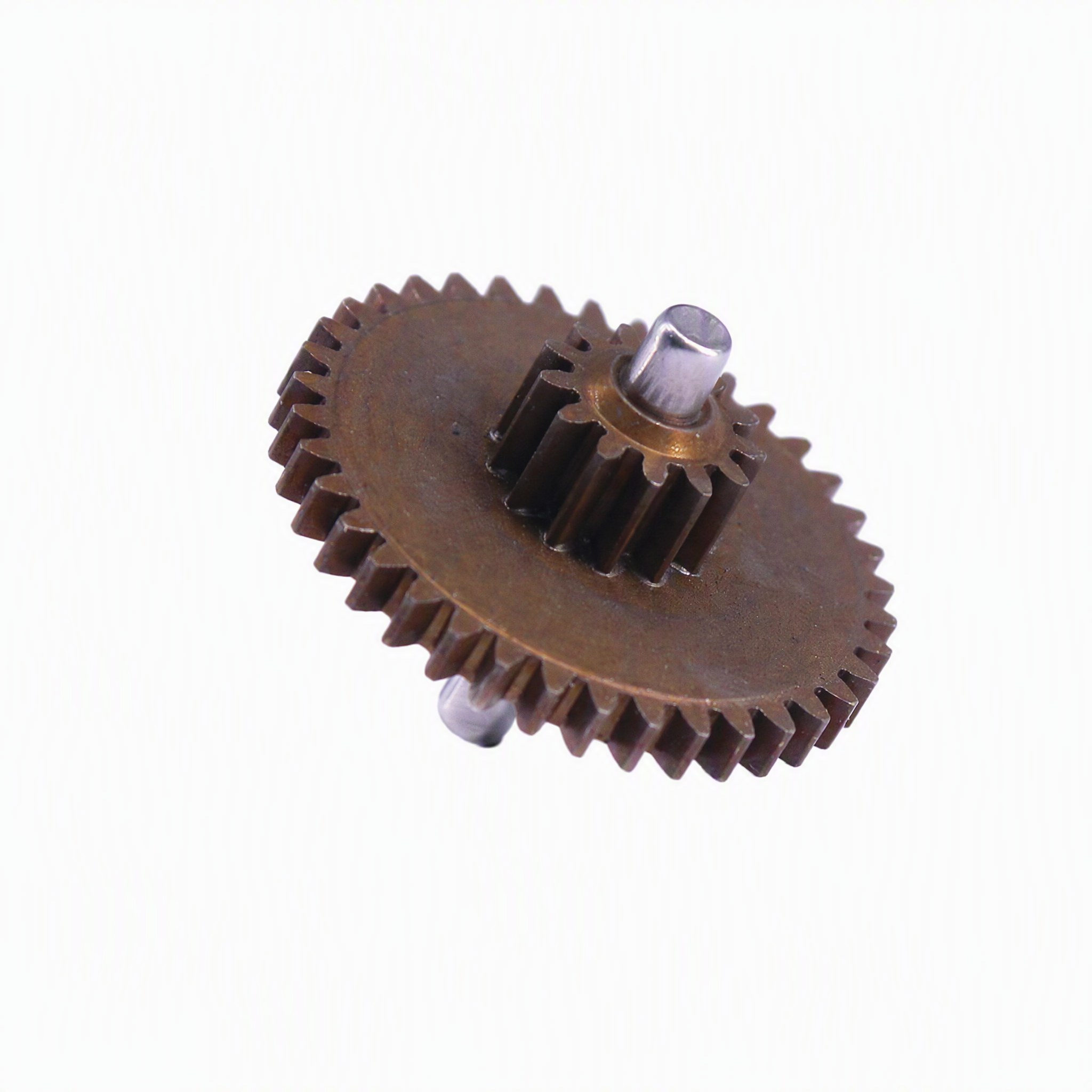
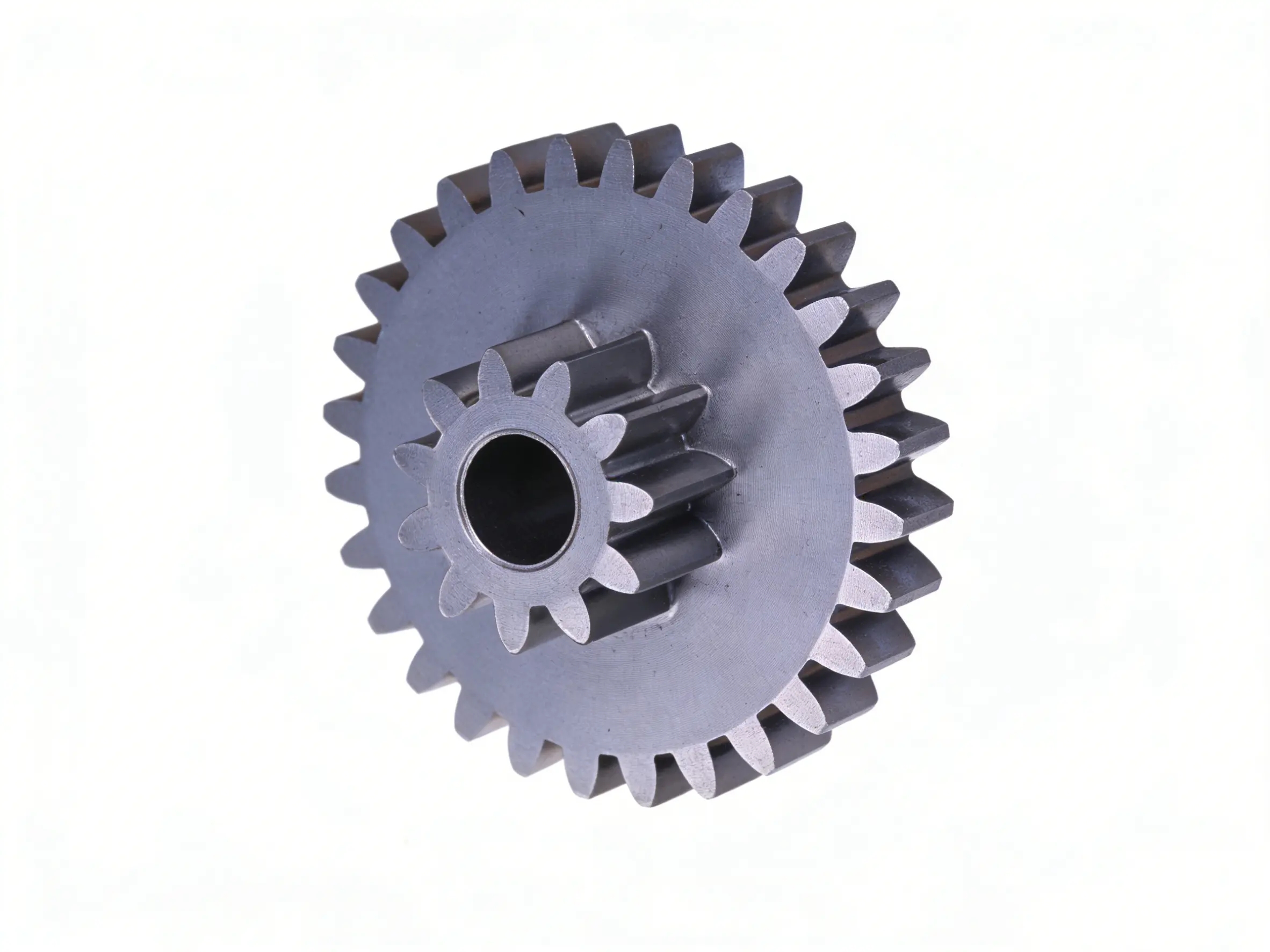
- High precision + low Ra: Sintering → sizing / cold coining (warpage correction) → grinding / honing / CNC machining. This is the mainstream solution for precision MIM gears and medical structural components.
- Mirror finish requirement: Sintering → polishing / chemical polishing. Chemical polishing removes a tiny material layer, so dimensional compensation must be reserved upfront.
Keywords: Powder metallurgy, Metal Injection Molding, powder metallurgy gears
Guangming Group specializes in R&D and manufacturing of metal forming technology and wear-resistant materials. Our main products include powder metallurgy components via powder compaction and metal injection molding.
We have a high-caliber technical team. Our founding team comes from Guangzhou Nonferrous Metal Research Institute, a research institute formerly under a national ministry, boasting rich industrial experience and strong R&D capacity to sustain continuous innovation.
The group holds 5 invention patents and over 30 utility model patents. We have obtained IATF16949, ISO9001:2015 Quality Management System, ISO14001 Environmental Management System and Intellectual Property Management System certifications, plus international trademark registration. We are an Innovative Enterprise of Guangdong Province, a Small and Medium-sized Hi-tech Enterprise of Guangzhou, a director unit of Guangdong Powder Metallurgy Industry Technology Innovation Alliance, and an initiator of Guangzhou Advanced Powder Metallurgy Cluster Promotion Center.
We use cookies to offer you a better browsing experience, analyze site traffic and personalize content. By using this site, you agree to our use of cookies. Privacy Policy