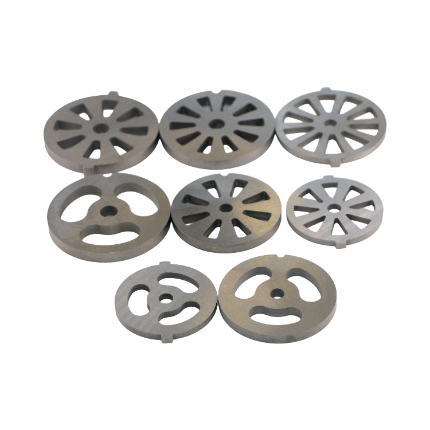
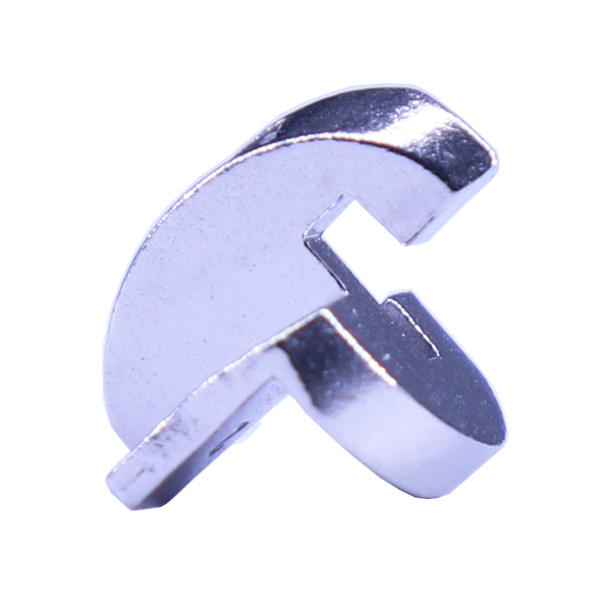
Applications: oil‑impregnated bearings, bearing sleeves, electrical contacts and anti‑friction gaskets
3. Stainless‑Steel Powder Metallurgy
Matrix materials: 304, 316L, 410, 420 and 430 stainless‑steel powder
Features: good corrosion and rust resistance; compactness is limited by die pressing, while MIM delivers higher density
Applications: fluid valve fittings, medical‑device components, sanitary‑ware and food‑equipment parts
4. Cemented Carbide (Tungsten‑based)
Matrix materials: WC‑Co (tungsten‑cobalt) and WC‑TiC‑Co composites
Features: ultra‑high hardness, outstanding wear resistance and poor machinability
Applications: cutting tools, drill bits, moulds, wear‑resistant punches and mining wear‑resistant parts
5. Soft Magnetic Composites (SMC, iron powder with insulating coating)
Matrix: compacted and sintered iron powder with surface insulation treatment
Features: low core loss under high‑frequency conditions, three‑dimensional magnetic circuits, capable of replacing silicon steel sheets
Applications: new‑energy motor cores, servo‑motor iron cores and inductor magnetic cores
6. Aluminium‑based Powder Metallurgy
Matrix materials: aluminium‑silicon and aluminium‑coated‑series alloy powder
Features: lightweight and low specific gravity
Applications: light‑weight structural components and heat‑dissipation parts; its output is lower than iron‑based and copper‑based materials
7. Titanium‑based Powder Metallurgy
Matrix: titanium and titanium‑alloy powder
Features: light weight, high strength and corrosion resistance; raw‑material powder comes at a high cost
Applications: aerospace components and medical implants, mostly processed by MIM or hot isostatic pressing
8. Other Special Material Systems
Refractory metals: tungsten and molybdenum for high‑temperature components
Metal‑ceramic composites: metal matrix mixed with ceramic particles for superior wear resistance
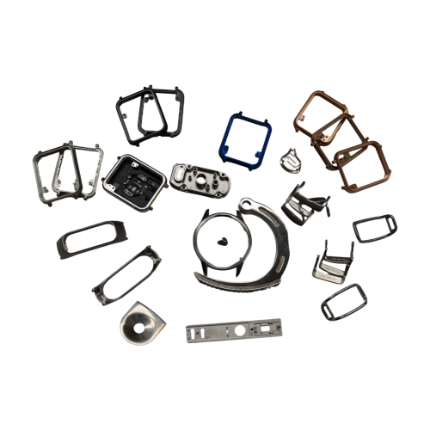
Special‑purpose MIM alloys: low‑alloy steel and superalloys for tiny, intricate and precision‑made parts
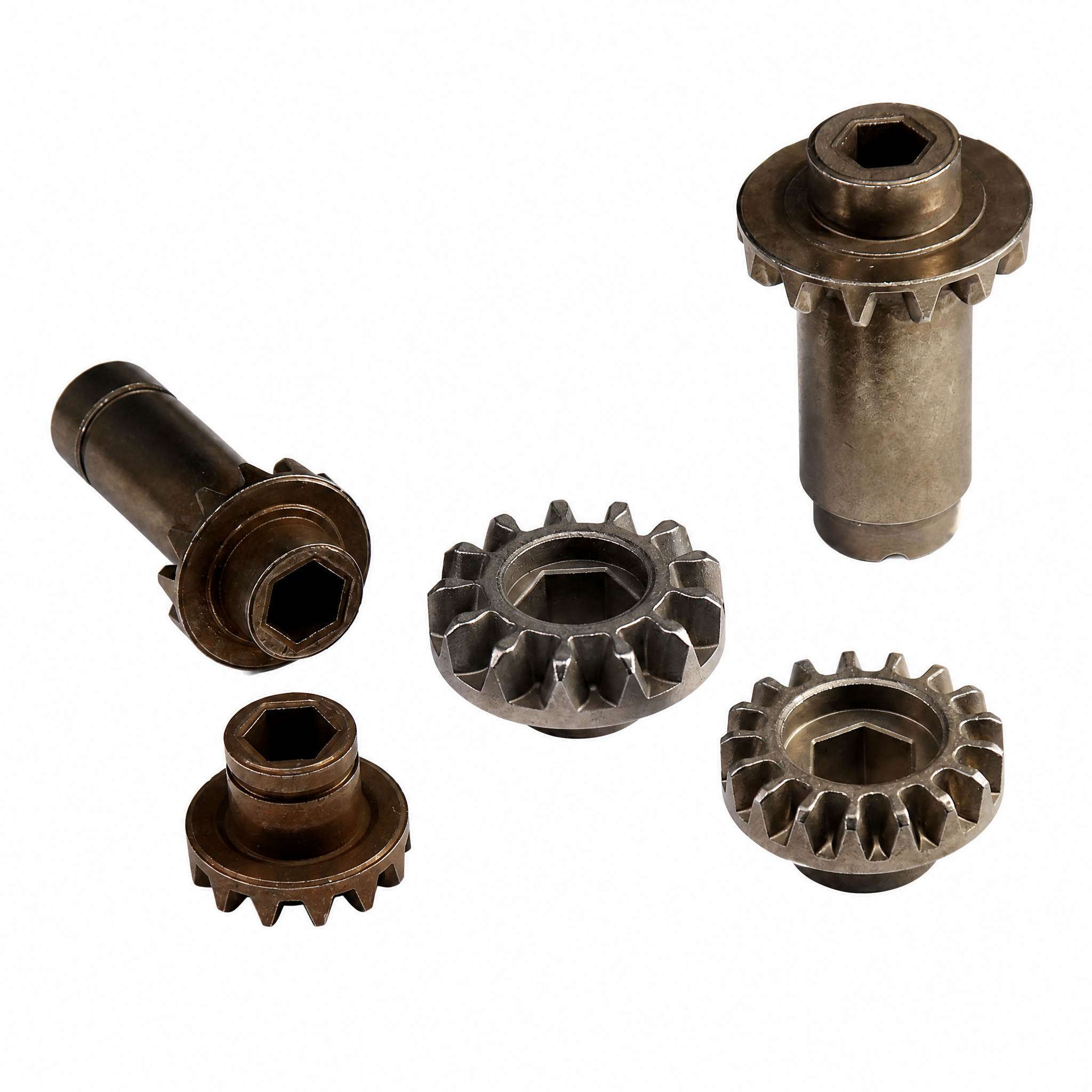
Keywords: powder metallurgy, metal injection moulding (MIM), powder‑metallurgy gears
Guangming Group
Guangming Group specializes in the research, development and manufacture of metal‑forming technologies and wear‑resistant materials. Its main‑line products cover powder‑metallurgy workpieces produced by metal compaction moulding and injection moulding.
The company boasts a high‑calibre talent team. Its founding team comes from Guangzhou Research Institute of Non‑Ferrous Metals, a research institute directly affiliated with a former national ministry‑level authority. The team possesses rich industry experience and strong R‑D capacity, delivering sustained innovative momentum for enterprise growth.
The firm has obtained 5 invention patents and over 30 utility‑model patents. It has acquired certifications for the IATF16949 Quality‑Management System, ISO9001‑2015 Quality‑Management System, ISO14001 Environmental‑Management System and Intellectual‑Property‑Management System, alongside an international trademark registration.
It is recognised as an Innovative Enterprise of Guangdong Province, a Guangzhou Little‑Giant Tech Enterprise, a director‑unit member of the Guangdong Powder‑Metallurgy Industrial‑Technology Innovation Alliance, and a sponsor organisation of the Guangzhou Advanced Powder‑Metallurgy Cluster Promotion Centre.
We use cookies to offer you a better browsing experience, analyze site traffic and personalize content. By using this site, you agree to our use of cookies. Privacy Policy