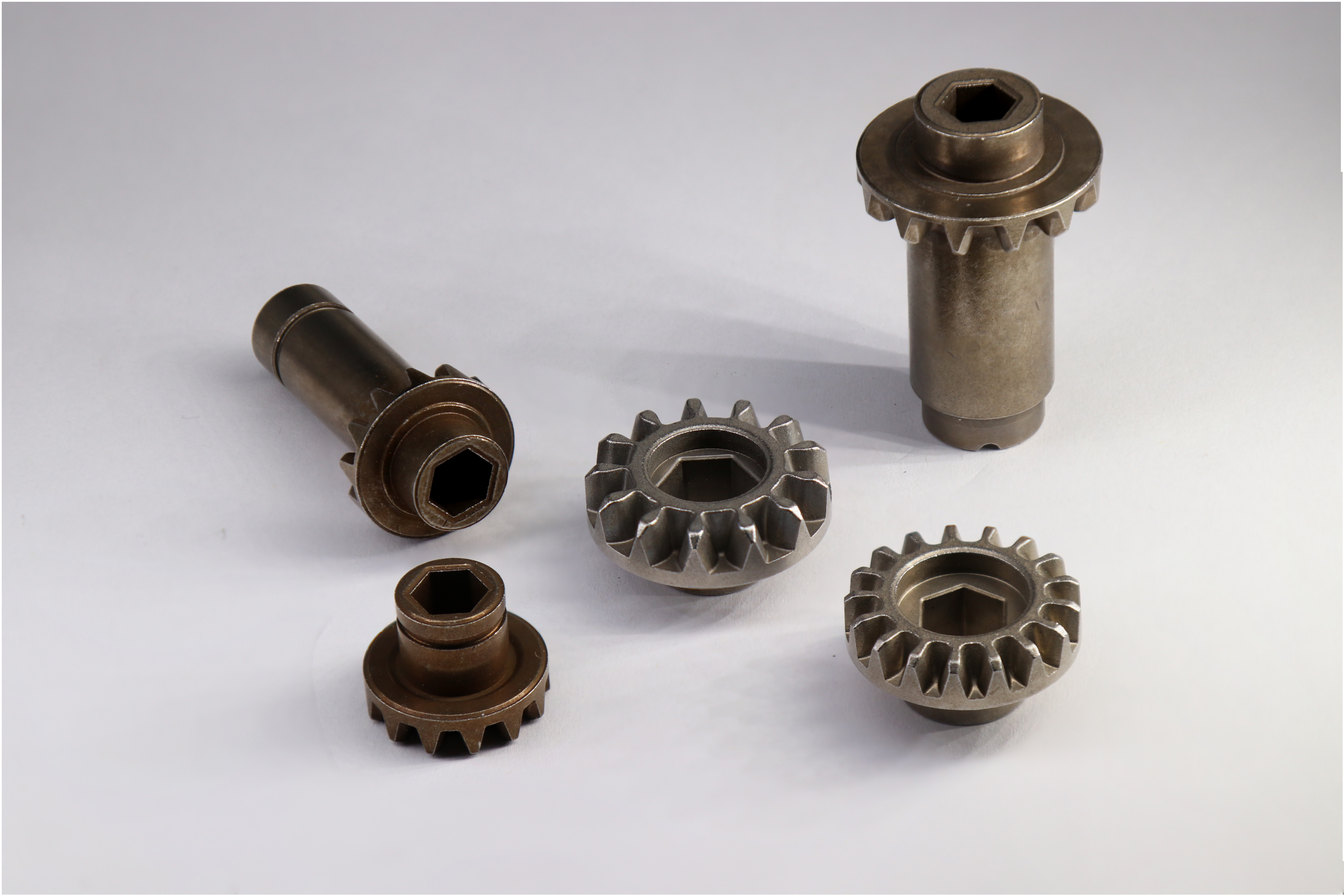
Complete Core Process Flow of Powder Metallurgy (Compression‑Molding Process, Excluding MIM)
Full process chain: Powder Preparation → Batching & Powder Mixing → Die Filling → Compression Molding (Green Compact) → Green Compact Inspection → Sintering → Sintered Part Inspection → Post‑treatment → Final Inspection & Warehousing
The MIM (Metal Injection Molding) process: Powder Preparation + Feedstock Mixing → Injection Molding → Debinding → Sintering → Post‑treatment. A separate comparison will be provided later.
1. Powder Preparation: Raw Material Production
Objective: To obtain metal powder with qualified particle size, purity and morphology. As the source procedure, powder quality directly determines the performance of finished parts.
Common Powder‑Making Methods
Reduction Process: For iron powder. Low cost with porous particles, suitable for general structural components.
Water Atomization: For iron powder, copper powder and stainless‑steel powder. Irregular‑shaped particles with good compressibility, most widely adopted in industry.
Gas Atomization: Produces spherical powder with excellent flowability yet high cost, mostly applied for MIM and high‑end components.
Key control indicators: particle‑size distribution, apparent density, flowability and oxygen content. Excessively high oxygen content will render sintered parts brittle and reduce mechanical strength.
2. Batching & Powder Mixing (Batch Blending)
Accurately weigh and blend metal powder with various additives according to formulated recipes.
Additive Components
1. Base powder: matrix materials such as iron powder, copper powder and stainless‑steel powder;
2. Alloying elements: copper, nickel, molybdenum and graphite for adjusting strength and hardness;
3. Lubricant (zinc stearate is most commonly used): reduces friction between powder and die inner walls during compaction, preventing green‑compact cracking and die sticking;
4. Forming auxiliaries.
Powder‑Mixing Procedure
Materials are fed into a 3‑D powder mixer with preset rotating speed and mixing duration to achieve homogeneous composition.
Risk notes: Over‑mixing causes powder work‑hardening; insufficient mixing leads to composition segregation, resulting in inconsistent hardness and strength across parts.
Well‑mixed powder shall be stored in sealed containers against moisture and oxidation.
Fill mixed powder into the cavity of cemented‑carbide die, then apply high‑pressure extrusion via hydraulic or mechanical presses to obtain shaped green compacts.
1. Die assembly: upper punch, lower punch, die cavity and core pin, which define part outer dimensions.
2. Die filling: fill powder into die cavity. Filling height is controlled by apparent density to indirectly manage part weight.
3. Compression: Punches exert pressure to squeeze and interlock powder particles, triggering plastic deformation for powder compaction.
Features of green compacts: fixed geometric shape formed merely by mechanical interlocking; very low strength and high brittleness, prone to chipping and edge spalling upon impact, with abundant interconnected and closed internal pores.
Common Compression Defects
Green‑compact delamination, cracking, corner chipping and uneven density (significant top‑to‑bottom density difference, especially for thick‑walled heavy parts).
Compacting pressure acts as a core parameter: insufficient pressure gives low density and poor finished‑part strength; excessive pressure causes green‑compact cracking and accelerated die wear.
4. Green‑Compact Visual & Weight Inspection
Pre‑inspection prior to sintering to reject green compacts with cracks, material shortage, edge chipping and out‑of‑spec weight.
Cracks in green compacts cannot heal after sintering and turn into scrap directly; defective workpieces must not enter sintering furnaces.
5. Sintering 【The Most Critical Procedure for Powder Metallurgy】
Sintering: Heat materials below metal melting points without melting. Solid components are formed via atomic diffusion bonding among powder particles.
Three‑stage procedure: Dewaxing → High‑temperature Sintering → Controlled Cooling. The whole process runs under protective atmosphere to prevent high‑temperature metal oxidation.
Typical temperature parameters: 1100‑1150℃ for iron‑based parts; 800‑900℃ for copper‑based parts; 1250‑1350℃ for stainless‑steel parts.
Protective atmospheres: dissociated ammonia, nitrogen, cracked ammonia and hydrogen, isolating air for anti‑oxidation purpose.
At high temperatures, metal atoms diffuse and form “sintering necks” to firmly bond powder particles. Pores shrink while part strength and hardness increase substantially. Sintering shrinkage normally ranges from 1%‑3%, for which shrinkage allowance shall be reserved in die design in advance.
3. In‑furnace Controlled Cooling
Cool down to discharge following specified process cooling rates. Cooling speed affects metallographic structure and hardness.
Post‑furnace inspection covers appearance, dimension, hardness, metallography and density.
Sintered parts obtain basic strength yet fail to meet finished‑part requirements on dimensional accuracy and surface finish, with pores remaining inside.
7. Post‑treatment Procedures (Selective according to requirements, not mandatory for all products)
Selected based on drawing performance requirements, critical for realizing diversified functional properties.
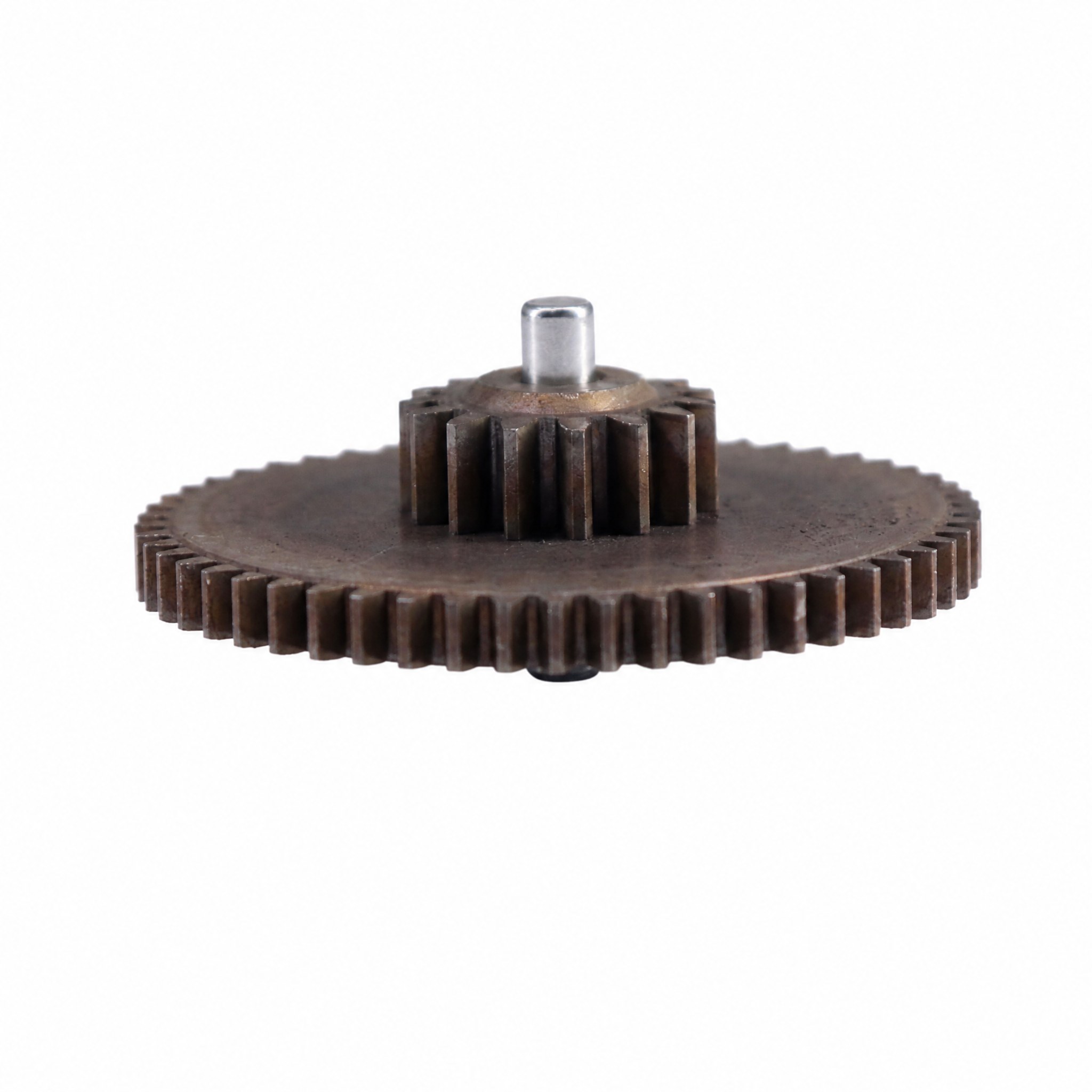
1. Sizing / Repressing: Sintered parts undergo secondary light compression inside sizing dies to correct deformation, improve dimensional accuracy and slightly boost density. Mandatory for most powder‑metallurgy gears and structural components.
2. Oil Impregnation: Submerge components in lubricating oil so pores absorb lubricant to fabricate self‑lubricating oil‑impregnated bearings.
3. Copper Infiltration: Melt and infiltrate copper into pores of iron‑based parts, greatly enhancing density, strength and toughness for heavy‑load gears.
4. Heat Treatment: Quenching & tempering for higher hardness and wear resistance; annealing for stress relief.
5. Steam Treatment (Bluing): High‑temperature steam generates Fe₃O₄ oxide film on part surfaces to seal surface pores for rust prevention and improved wear resistance.
6. Machining: Limited turning, drilling and milling operations. Powder‑metallurgy parts are not fit for heavy cutting; internal pores easily cause tool chipping, so machining should be minimized.
7. Surface Finishing: Electroplating and phosphating.
8. Final Inspection & Warehousing of Finished Products
Inspect dimensional tolerances, hardness, density, crush strength and appearance, followed by rust‑proof packaging.
Keywords: Powder Metallurgy, Metal Injection Molding, Powder Metallurgy Gears
Guangming Group specializes in R&D and manufacturing of metal forming technologies and wear‑resistant materials. Its main products include powder‑metallurgy components via metal compression molding and injection molding.
The company boasts a high‑caliber talent team. Its founding team originates from Guangzhou Research Institute of Non‑ferrous Metals, a former national ministerial‑level research institute, possessing rich industrial experience and strong R&D capacity to deliver sustained innovation momentum for enterprise development.
The company has obtained 5 invention patents and more than 30 utility‑model patents. It has passed IATF16949, ISO9001‑2015 Quality Management System, ISO14001 Environmental Management System and Intellectual Property Management System certifications, and holds international trademark registration. It is recognized as an Innovative Enterprise in Guangdong Province, Guangzhou Science & Technology Little Giant Enterprise, council member unit of Guangdong Powder Metallurgy Industry Technology Innovation Alliance, and initiator unit of Guangzhou Advanced Powder Metallurgy Cluster Promotion Center.
We use cookies to offer you a better browsing experience, analyze site traffic and personalize content. By using this site, you agree to our use of cookies. Privacy Policy